Why Do Healthy Trees Sometimes Drop Branches Without Warning During Summer Heat?
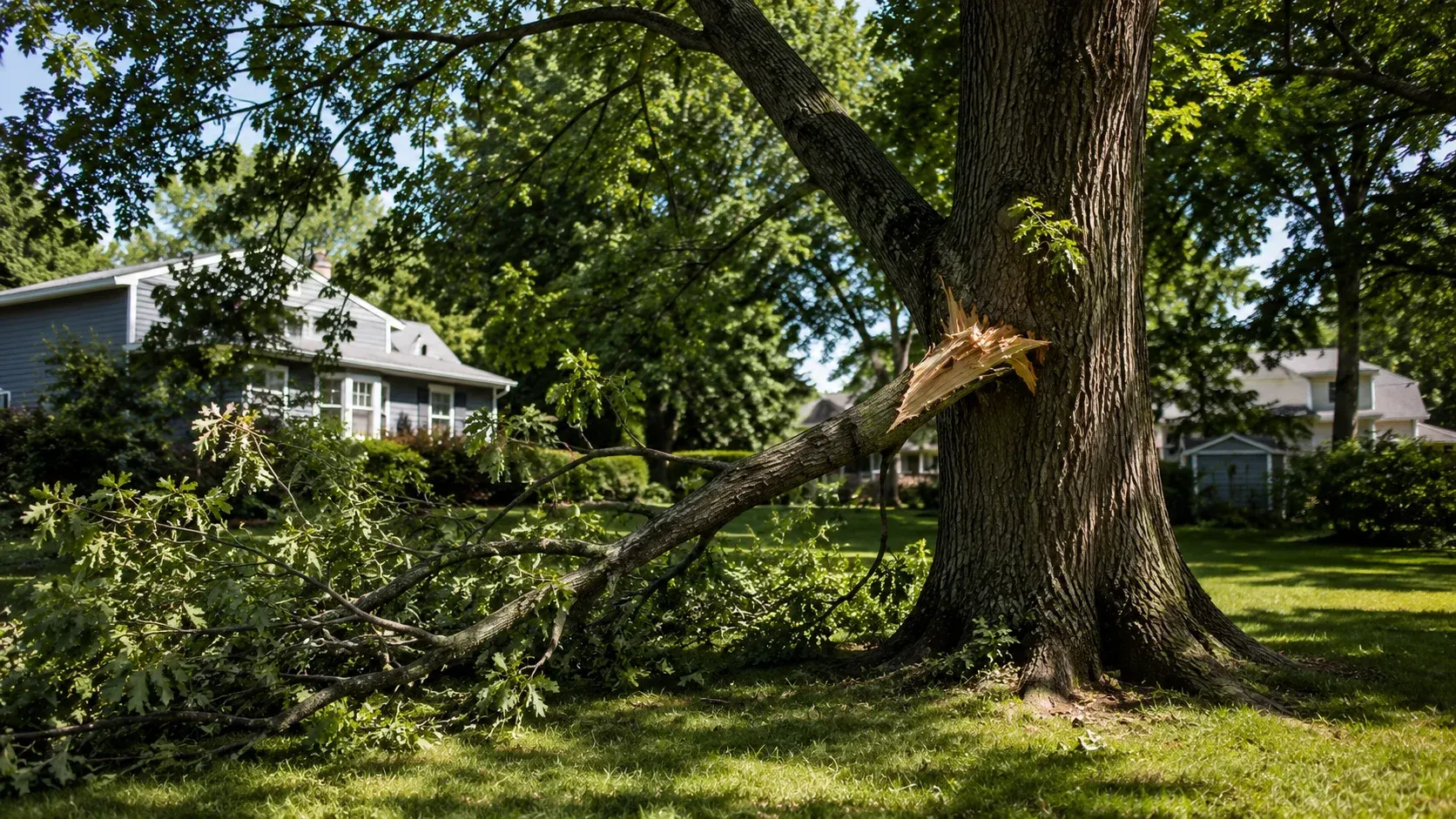
Table of Contents
- Introduction
- What Sudden Branch Drop Actually Is
- Why Heat and Drought Put Hidden Stress on Limbs
- Tree Species in the Stroudsburg Area That Drop Limbs More Often
- Structural Conditions That Raise the Risk
- Safety Steps for Homeowners and Property Managers
- Preventive Tree Care That Makes a Difference
- Conclusion
- Noticed a Heavy Limb Hanging Over Your Yard This Summer?
- Frequently Asked Questions
Key Takeaways
- Healthy trees drop branches during summer heat because of a condition arborists call sudden branch drop, which happens most often on hot, calm afternoons after a dry stretch.
- The exact cause is still debated, but heat stress, water movement inside the limb, and the weight of fully leafed branches all appear to play a part.
- Oaks, maples, elms, beeches, and willows are among the species reported most often, and all of them grow throughout the Poconos.
- A branch can look completely normal right up until it falls, which is why summer failures catch so many property owners off guard.
- Regular inspections, smart watering during dry spells, and weight reduction pruning on long horizontal limbs are the most practical ways to lower the risk.
Introduction
Healthy trees drop branches during summer heat because of a phenomenon called sudden branch drop, where a mature limb fails on a hot, still day with no storm and no obvious defect. Researchers have not settled on a single cause, but the pattern points to a mix of heat stress, changes in how water moves through the limb, and the full weight of summer foliage pulling on long horizontal branches.
That combination matters if you own property around Stroudsburg, PA. Most people assume a falling branch means the tree was dying, so a failure from a green, leafy tree feels impossible until it happens over a driveway or a patio. Understanding why it happens, and scheduling professional pruning before the hottest weeks arrive, gives you a realistic way to manage the hazard instead of just hoping your trees behave.
What Sudden Branch Drop Actually Is
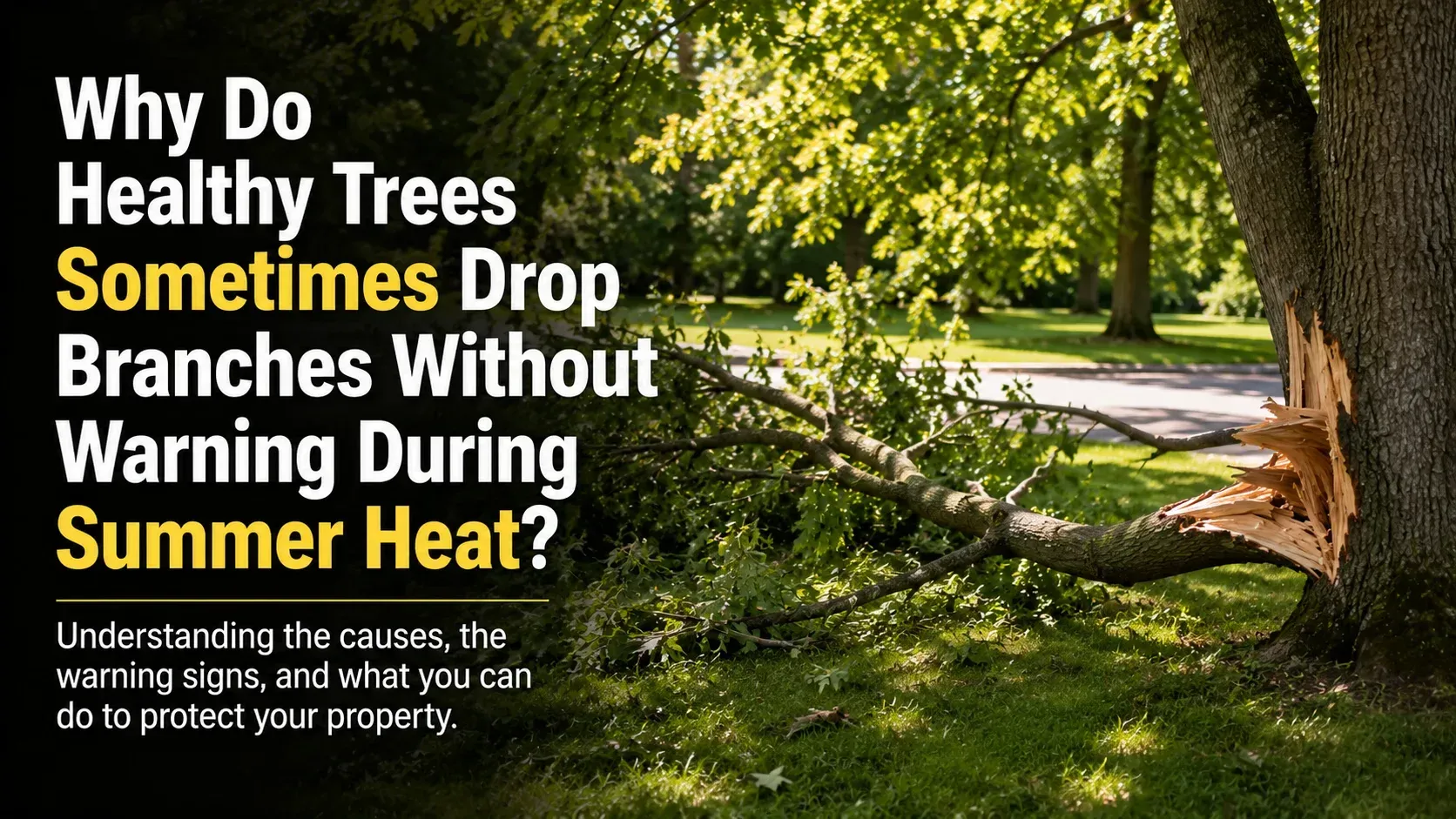
Arborists use a few names for this: sudden branch drop, sudden limb failure, or summer branch drop. All of them describe the same event. A large, live limb, often one growing nearly horizontal, breaks away from the trunk during warm weather without wind, rain, or ice to blame.
The failures follow a pattern. They tend to happen in the afternoon or early evening on hot, calm days, often after several weeks with little rain. The limbs involved are usually long, heavy, and fully leafed out. And the break point frequently shows sound wood, which is the part that surprises people most.
Why Science Has Not Fully Explained It
It is worth being honest here: no one has proven a single mechanism. One theory holds that on hot days, moisture builds in the limb faster than the tree can move it, adding internal pressure and weight. Another suggests the wood itself weakens slightly as internal humidity rises. A third points to tiny cracks that grow slowly over years until one hot afternoon finishes the job.
The most likely answer is that several of these factors stack up at once. For a homeowner, the takeaway is simple. Summer limb failure is a documented behavior of mature trees, not a freak event, and it does not require the tree to be sick.
Why Heat and Drought Put Hidden Stress on Limbs
A mature tree moves an enormous amount of water on a hot day, sometimes hundreds of gallons. During a heat wave, the tree may close the small pores on its leaves to conserve moisture. That decision protects the canopy but changes the pressure balance inside branches, and researchers suspect this shift is connected to summer failures.
Drought adds a second layer of stress. Dry soil means less water reaching the roots, so the tree starts rationing. Wood that stays under that kind of strain for weeks responds differently to load than wood in a well watered tree.
The Weight Problem Nobody Sees
By July, every branch carries its maximum load for the year. Full foliage adds hundreds of pounds to a large horizontal limb, and unlike snow, that weight never melts off. A limb that handled the same geometry fine in April is working much harder in a Pocono heat wave, and the margin between holding and failing gets thinner than it looks from the ground.
Tree Species in the Stroudsburg Area That Drop Limbs More Often
Any mature tree can drop a limb, but reports cluster around certain species. Oaks lead most lists, followed by elms, beeches, sycamores, willows, and several maples. Eucalyptus is notorious for it in other regions, though that is not a local concern here.
That list should sound familiar to anyone in Monroe County. Red and white oaks dominate wooded lots across the Poconos, and sugar maples and beeches fill in behind them. Many neighborhoods around Stroudsburg were built into existing forest, which means houses sit directly under mature canopies that predate the streets.
Age and Size Matter as Much as Species
Sudden branch drop is mostly a mature tree problem. Young trees have shorter, lighter limbs with less leverage working against the attachment point. A 90 foot oak with a 40 foot lateral limb is a different structure entirely, and that limb has decades of accumulated internal history that nobody can see from the outside.
Structural Conditions That Raise the Risk
Some limbs are simply built to fail sooner. Knowing what to look for helps you decide which trees deserve professional attention first.
Long Horizontal Limbs
Limbs that grow nearly parallel to the ground carry their weight at maximum leverage. The longer the limb, the more force concentrates where it meets the trunk. Most documented summer failures involve exactly this kind of branch.
Included Bark and Tight Unions
When two stems grow at a narrow angle, bark can get pinched inside the joint, preventing solid wood from forming. These unions look fine from below but are structurally weak, and heat stress gives them one more reason to let go.
Past Topping or Storm Damage
Trees that were topped years ago often regrow clusters of fast, weakly attached limbs. Old storm wounds can also hide internal decay under healthy looking bark. If a tree on your property has a rough history, it belongs on your inspection list, and in some cases tree removal is the more sensible call than repeated corrective pruning.
Safety Steps for Homeowners and Property Managers
You cannot predict an individual failure, but you can manage where the consequences land.
Start by mapping what sits under your largest limbs. Play areas, parking spots, patios, and walkways under big horizontal branches deserve a hard look. During heat waves, it is reasonable to shift outdoor activity away from those zones, especially on still afternoons after dry weeks, since that is when failures cluster.
Listen, too. People who witness these events often report cracking or popping sounds shortly before the break. If you hear something like that from a mature tree, move away and keep others clear until someone qualified can look at it.
If a limb does come down, resist the urge to handle it yourself. Large limbs hold tension in strange ways, and partial failures still hanging in the canopy are more dangerous than the ones on the ground. Keeping the area clear and calling for emergency service is the safer sequence.
Preventive Tree Care That Makes a Difference
No pruning program eliminates the risk entirely, and any company that promises otherwise is overselling. What proper care does is shrink the odds and catch the most likely failures early.
Inspections Before Peak Heat
A trained eye can spot the warning signs that homeowners miss: subtle cracks, weak unions, overextended limbs, and early decay. Late spring or early summer is a practical time for this in the Poconos, before the July and August heat arrives.
Weight Reduction Pruning
Selectively shortening long horizontal limbs reduces leverage at the attachment point without disfiguring the tree. This is careful, targeted work. It is not topping, which actually creates the weak regrowth that fails later.
Watering During Dry Stretches
Deep, slow watering every week or two during drought helps mature trees manage internal stress. A soaker hose at the drip line does far more good than a quick daily sprinkle at the trunk.
Conclusion
Sudden branch drop is one of the stranger behaviors of mature trees. A healthy, green limb can fail on a windless summer afternoon, and the honest answer is that science has not fully explained why, though heat stress, internal water dynamics, and peak foliage weight all appear involved. Around Stroudsburg, where oaks, maples, and beeches tower over homes built into old forest, the conditions for it show up every summer.
The practical response is awareness rather than fear. Know which of your trees carry long horizontal limbs over places people gather, pay attention during hot dry spells, and put mature trees on a regular inspection and pruning schedule. Those steps do not remove the risk, but they put you in a much better position than simply assuming a green tree is a safe tree.
Noticed a Heavy Limb Hanging Over Your Yard This Summer?
If a big oak or maple on your Stroudsburg property has you second guessing where the kids play or where you park, a professional assessment can tell you whether that concern is justified. There is no pressure and no obligation in asking. You can
contact McIntyre's Tree Service or call (610) 762-0660 for a free quote, and a local arborist will walk the property with you and explain what your trees actually need, even if the answer is nothing at all.
Frequently Asked Questions
Can a completely healthy tree really drop a large branch with no warning?
Yes. Sudden branch drop is documented on live, green limbs that show sound wood at the break. It happens most often on hot, calm days after dry weather, which is exactly when people least expect a failure.
What time of year does sudden branch drop happen in Pennsylvania?
Most incidents occur during the hottest stretch of summer, typically July and August, and often in the afternoon or early evening. Extended dry periods before a heat wave appear to raise the likelihood.
Which trees near my home should I watch most closely?
Mature oaks, maples, elms, beeches, sycamores, and willows appear most often in failure reports. Within any species, long horizontal limbs on older trees deserve the most attention, especially those extending over driveways, patios, or play areas.
Are there warning signs before a branch falls?
Sometimes. Witnesses report cracking or popping sounds minutes before failure, and some limbs sag slightly beforehand. Many failures give no visible warning at all, which is why inspections focus on structural risk factors rather than trying to predict a specific event.
Who is responsible if a branch from my tree damages a neighbor's property?
Responsibility usually depends on whether the owner knew, or reasonably should have known, about a hazard. Rules vary by municipality and insurance policy, so it is worth reviewing your coverage and keeping records of any inspections or tree work you have done.
Related Posts