Can You Cut Up a Fallen Tree Yourself? (And Why You Shouldn't)
Table of Contents
- Introduction
- Why Trees on the Ground Are Harder to Cut Than They Look
- The Problem With Tension and Compression
- Hidden Weight Distribution
- Chainsaw Control and Kickback
- What You Can Reasonably Handle Yourself
- When Professional Fallen Tree Removal Becomes Necessary
- How Professional Tree Removal Works
- The Benefits of Bringing in a Professional
- Mistakes People Make When Attempting DIY Fallen Tree Removal
- Is That Power Line Involved? That Changes Everything
- Conclusion
- When to Call McIntyre Tree Service
- Frequently Asked Questions
Key Takeaways
- DIY fallen tree removal is generally only appropriate for small, loose branches that are clear of structures, fences, and power lines.
- Fallen trees often contain hidden tension, compression, and uneven weight distribution that can cause logs or branches to shift unexpectedly during cutting.
- Chainsaw kickback, pinched saw blades, and loss of control are among the most common causes of injuries during DIY tree removal.
- Trees resting against homes, fences, other trees, or any structure should be evaluated and removed by experienced tree professionals.
Introduction
DIY fallen tree removal can work for small, loose branches in open areas, but most fallen tree projects involve hidden hazards like tension, pinched wood, and unstable weight distribution. Chainsaw injuries, property damage, and electrical risks make professional removal the safer choice for trees near structures, fences, or power lines. Even if you own a chainsaw, understanding these risks before cutting is essential.
Cutting up a fallen tree yourself might seem simple, but most DIY tree removal projects carry serious risks including chainsaw injuries, unexpected tension release, and hidden weight distribution problems. If a fallen tree is near structures, fences, or power lines, professional tree removal is almost always the safer route. Before you start cutting, understanding what makes a fallen tree dangerous can help you decide whether this is a manageable weekend project or something best left to professionals.
Why Trees on the Ground Are Harder to Cut Than They Look
The Problem With Tension and Compression
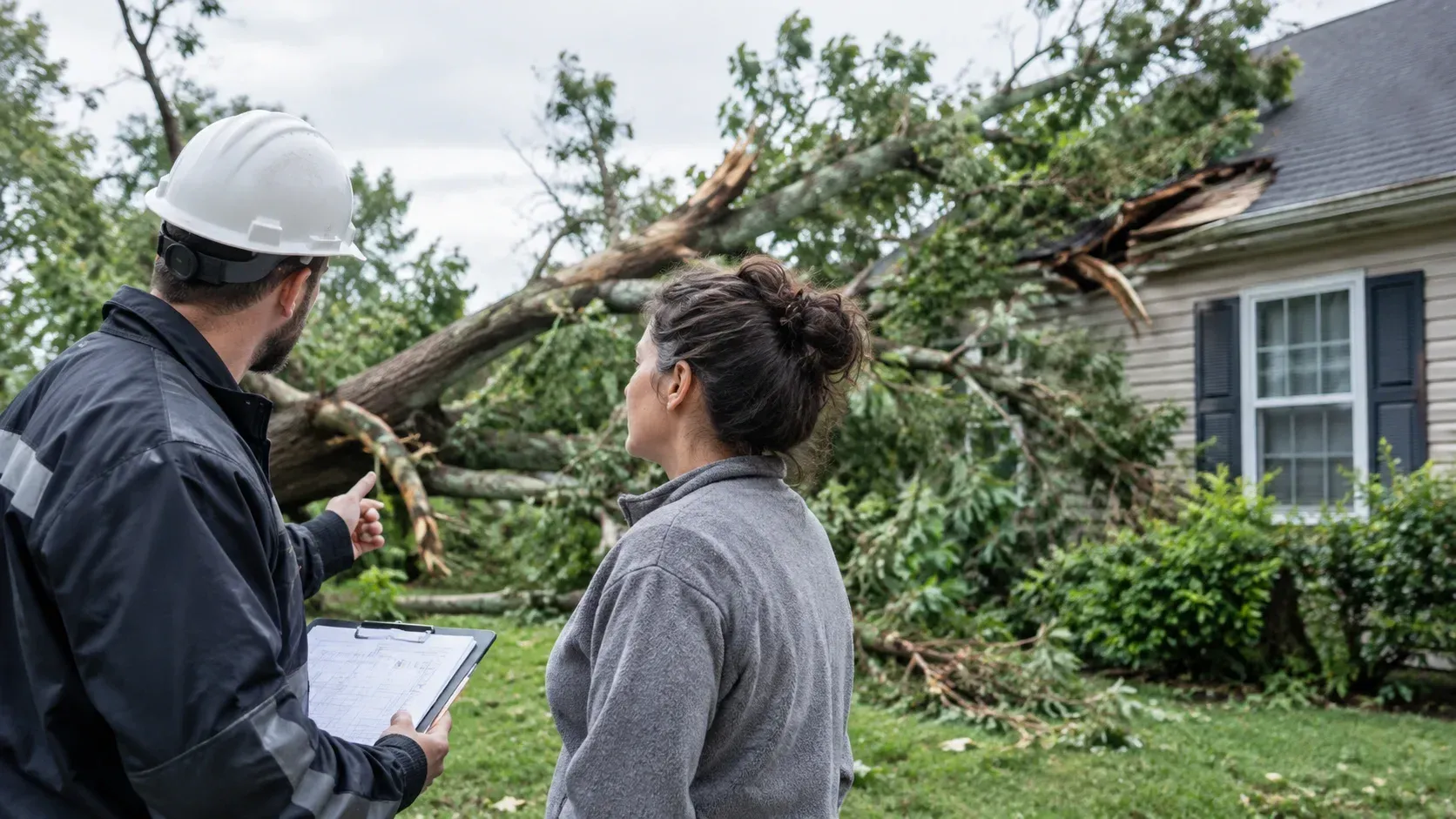
When a tree falls, branches and sections often end up under stress from their own weight. A tree resting against a fence, propped against another tree, or supported by one end can have different parts under extreme compression or tension. The moment you cut into these areas, the tree can spring, roll, or snap with force that throws branches or sections unpredictably. This happens faster than you can react, even with proper protective gear.
Hidden Weight Distribution
A fallen tree rarely lies evenly on the ground. Branches support it unevenly, dirt may prop up one section while another sags, or the tree may rest against objects that hide how the weight is actually distributed. What looks stable can shift dramatically once you remove even a small section. Professional tree removal assesses these weight patterns before making the first cut.
Chainsaw Control and Kickback
Kickback, pinching, and loss of control are the leading causes of chainsaw injuries. When a blade hits pinched wood or encounters unexpected resistance, the tool can jerk violently or throw material at high speed. The risk increases with a fallen tree because you often can't predict how the wood will behave as you cut through it.
What You Can Reasonably Handle Yourself
Not every fallen tree removal job requires a professional. Small tasks are generally safe if you follow these guidelines:
- Loose branches with no visible tension or bowing
- Branches that are completely clear of structures, fences, and other debris
- Small sections that can be cut and moved without resistance
- Light yard cleanup of fallen twigs and leaves
If you are unsure whether the tree meets these conditions, treating it as a professional job is the safer choice.
When Professional Fallen Tree Removal Becomes Necessary
Contact a professional tree removal service if any of these apply:
- The fallen tree is large, or you are unsure of its size relative to your equipment
- Any part shows visible bowing, bending, or appears to be under stress
- The tree is tangled with a fence, structure, or leaning against another tree
- The tree is anywhere near power lines
- The tree is blocking a driveway, fence, or walkway
- You lack proper protective gear, a reliable chainsaw, or feel uncertain about the task
How Professional Tree Removal Works
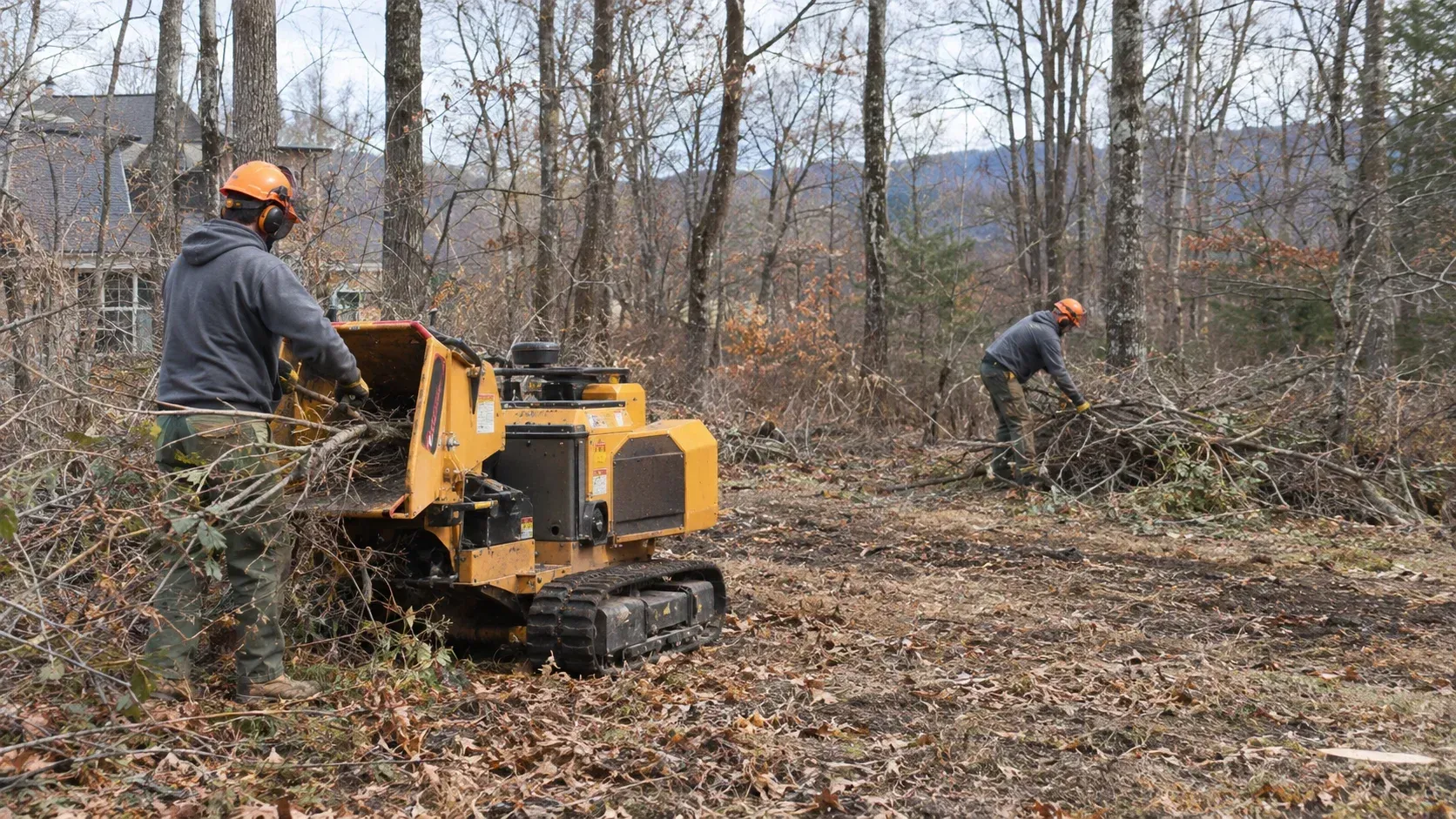
A professional crew assesses the tree's position and stress patterns before cutting begins. They identify which sections to cut first to safely release tension, plan the work sequence to avoid sudden shifts, and use equipment matched to the job size. Most importantly, they understand how a fallen tree will behave at each step, preventing the unexpected failures that cause injuries during DIY attempts.
The Benefits of Bringing in a Professional
Safety is the primary benefit, but professional removal also means no additional damage to fences or structures, efficient debris cleanup, and the job completed in a fraction of the time it would take working alone. If the tree is anywhere near your home or valuable landscaping, the cost of professional removal is often far less than the cost of accidental damage.
Mistakes People Make When Attempting DIY Fallen Tree Removal
- Cutting into tension without assessment. This is the most common cause of injury during fallen tree removal attempts.
- Working alone on anything larger than small branches, with no one nearby to get help if something goes wrong.
- Skipping protective gear or using old, poorly maintained equipment.
- Assuming a tree near a fence or structure is straightforward. Tangled or propped trees behave unpredictably.
- Going near anything close to power lines. This should always be handled by professionals.
- Rushing the job instead of taking time to assess conditions before the first cut.
Is That Power Line Involved? That Changes Everything
If the fallen tree is near power lines, stop immediately and call the tree company. Do not attempt any removal work. A tree touching a live power line creates an electrocution hazard that can be fatal. Professional tree removal teams coordinate with tree crews to address this safely, but you should never approach the tree yourself.
Conclusion
Whether you can cut up a fallen tree yourself often depends on more than the tree's size, with factors like tension, positioning, and proximity to structures or power lines all playing a role. DIY fallen tree removal can be reasonable for small, loose debris, but larger trees, or those resting awkwardly against fences or structures, carry risks that are not always obvious at first glance. Understanding these factors can help homeowners decide when a project is manageable and when professional fallen tree removal is the more practical choice.
When to Call McIntyre Tree Service
If you have a fallen tree and are unsure whether it is safe to handle yourself, our team is happy to take a look. We can assess the situation, discuss your options, and handle the work if needed. Reach out via email at mcintyrestreeservice@gmail.com or call 610-762-0660.
Frequently Asked Questions
Is it ever okay for us to cut up a fallen tree ourselves?
Small, loose branches with no visible tension and away from structures are generally lower risk, but larger sections often carry hidden hazards.
What makes DIY fallen tree removal more dangerous than cutting firewood?
Fallen trees can have sections under tension or resting awkwardly, which can shift or release unexpectedly when cut.
How do we know if a tree is under tension?
Signs include bent or bowed sections, branches wedged against other objects, or parts of the tree appearing to be under visible stress.
Is fallen tree removal more involved if the tree is tangled with our fence?
Yes, trees tangled with fences or structures often require careful planning to avoid further property damage during removal.
What should we do if the fallen tree is near power lines?
We should avoid the area entirely and contact the tree company first, since this changes the situation significantly.
Related Posts