How Much Does Land Clearing Typically Cost in the Poconos?
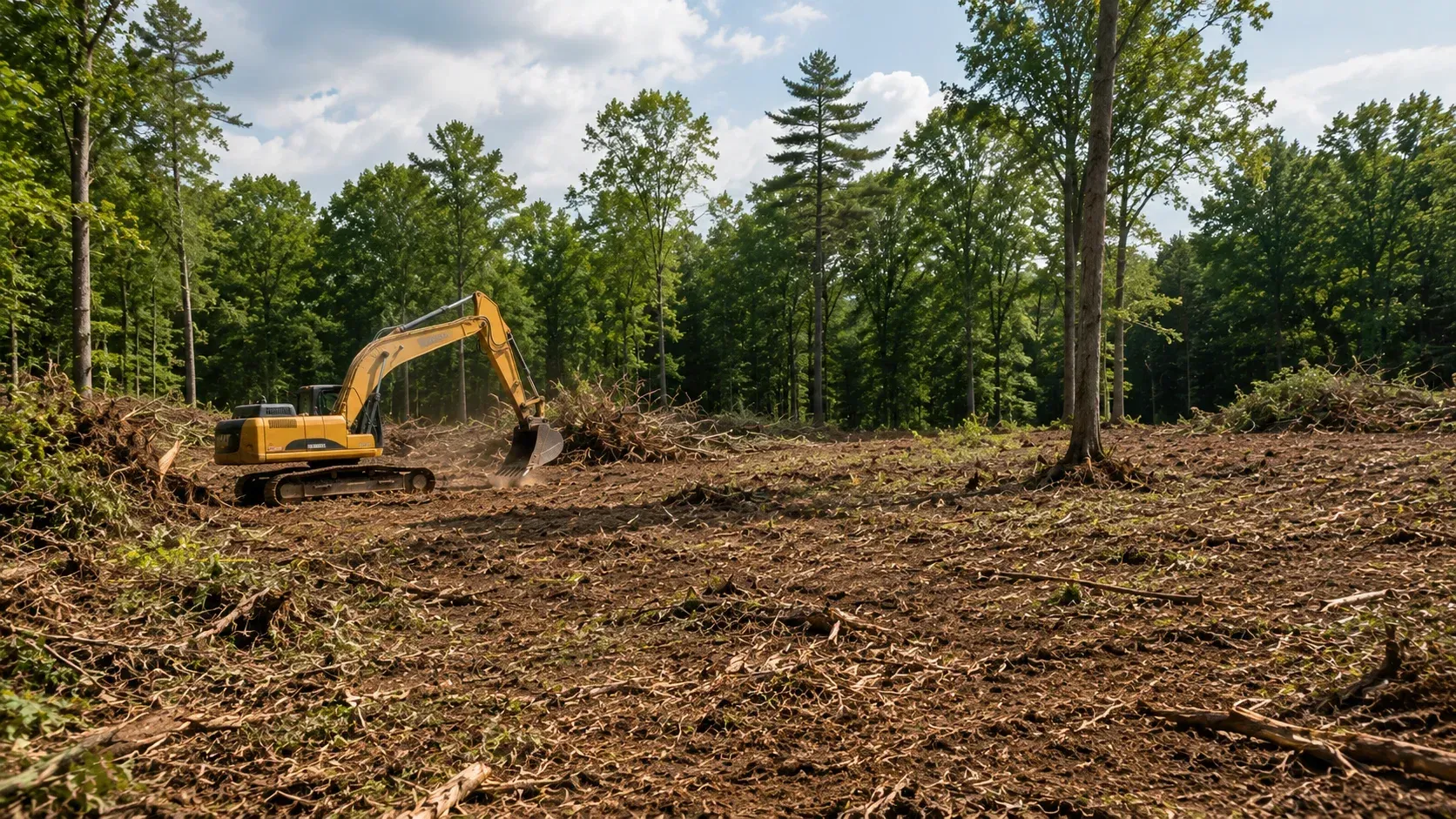
Table of Contents
- Introduction
- Typical Land Clearing Price Ranges in the Poconos
- The Factors That Drive Your Quote Up or Down
- Common Land Clearing Methods and How They Compare
- Costs That Surprise People
- What to Expect During the Clearing Process
- Conclusion
- Trying to Budget for That Overgrown Lot?
- Frequently Asked Questions
Key Takeaways
- Land clearing cost in the Poconos typically falls between $1,500 and $6,000 per acre, though rocky terrain, steep slopes, and dense hardwoods can push a project above that range.
- Tree density is the single biggest cost driver. A brushy field and a mature oak forest are completely different jobs, even at the same acreage.
- Terrain and access matter more here than in flatter parts of Pennsylvania. Glacial rock, wet ground, and tight driveways all add equipment time.
- The method chosen, whether selective clearing, full excavation, or forestry mulching, changes both the price and what the finished lot looks like.
- A written on site estimate is the only reliable number for a specific property. Per acre figures are useful for budgeting, not for final decisions.
Introduction
Land clearing in the Poconos typically costs between $1,500 and $6,000 per acre, depending on how heavily wooded the property is and how difficult the terrain makes the work. Light brush on flat, accessible ground sits at the low end, while a steep, rocky lot full of mature hardwoods can run higher than that range entirely.
Those numbers matter because clearing is usually the first real expense in a bigger plan: a new home, a garage, a pasture, or simply a usable yard carved out of the woods. Budget it wrong and everything behind it slips. This guide breaks down what actually drives land clearing pricing around Stroudsburg and Monroe County, so the estimate you eventually get makes sense instead of feeling like a number pulled from the air.
Typical Land Clearing Price Ranges in the Poconos
Published national figures put land clearing anywhere from about $1,500 to $6,000 per acre, and Pocono projects generally track with that spread. The wide range is not vague. It reflects how different two acres can be.
As a rough guide: an acre of light brush and saplings often lands in the $1,500 to $3,000 neighborhood. A moderately wooded acre with a mix of tree sizes tends to run $3,000 to $5,000. Densely forested ground with large oaks, maples, and hemlocks can reach $5,000 to $6,000 per acre or more, especially once stumps and hauling enter the picture.
Why Small Lots Cost More Per Acre
Clearing a quarter acre building site rarely costs a quarter of the one acre price. Mobilizing equipment, setting up, and hauling debris carry fixed costs no matter the size of the job. Small residential clearings around Stroudsburg are often quoted as a flat project price rather than by the acre for exactly this reason.
The Factors That Drive Your Quote Up or Down
Two neighboring properties can get very different quotes. These are the variables an estimator is weighing while walking your land.
Tree Density and Size
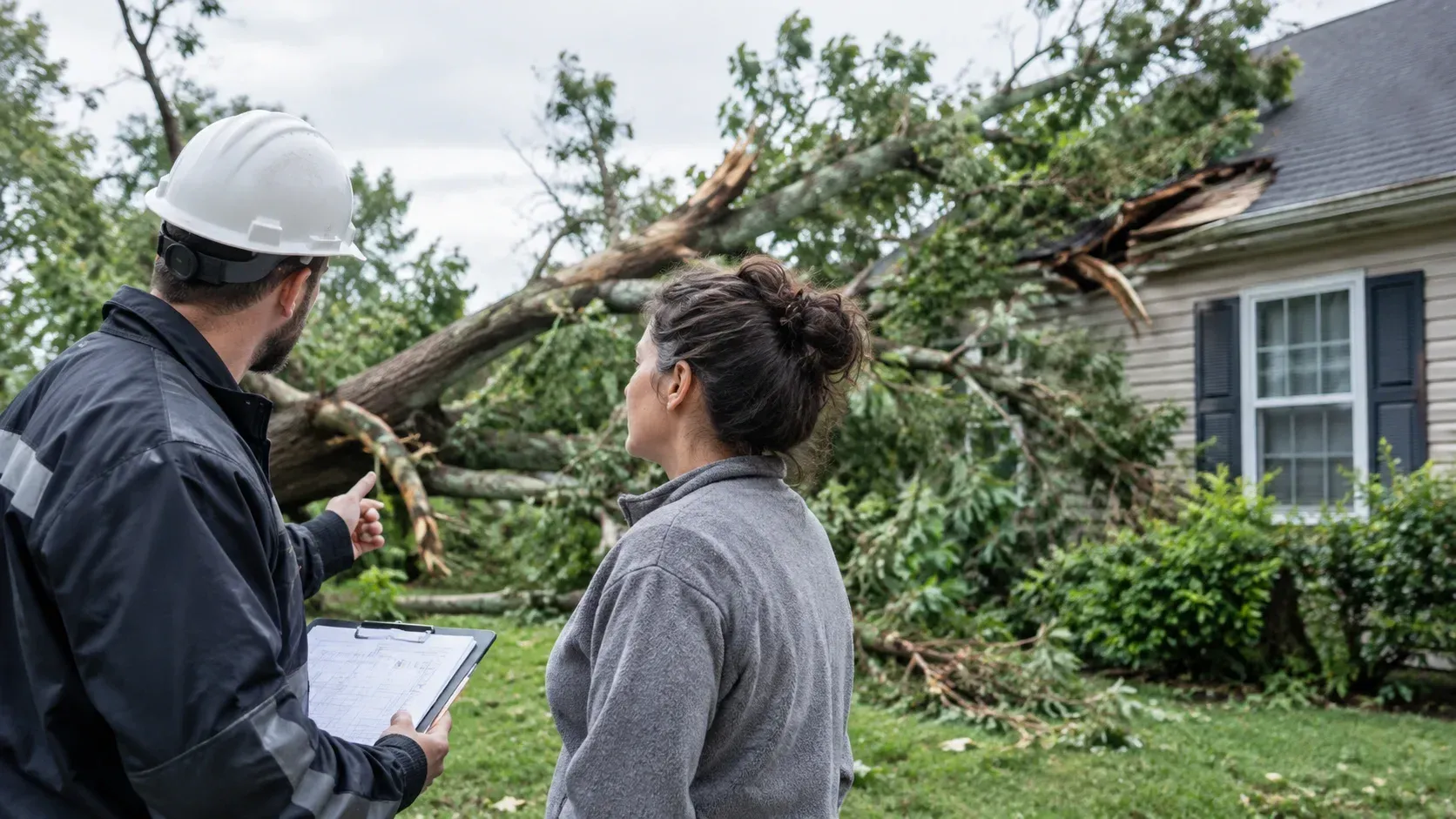
This is the big one. Removing brush and a few saplings is mostly machine work. Taking down dozens of mature hardwoods is tree work first and clearing second, and each large tree adds cutting time, debris volume, and a stump. If several trees are big enough to need careful tree removal near structures or lines, that portion gets priced like the skilled work it is.
Terrain and Soil
The Poconos sit on glacial ground. Buried boulders, ledge rock, steep grades, and seasonal wet spots are all common, and all of them slow equipment down. A slope that a dozer crawls up in low gear costs more per hour of progress than a flat field, and rock that has to be worked around or dug out adds time nobody can see from the road.
Access
Equipment has to reach the work. A wide, firm driveway is easy. A narrow lane, a soft lawn that would rut under a truck, or a clearing area far from the road all add handling. In some cases material has to be moved twice, once to a staging spot and again onto a truck.
What Happens to the Debris
Cleared material has to go somewhere. Hauling logs and brush off site costs more than chipping on site, and chipping costs more than mulching material back into the ground. Some owners keep firewood or wood chips to trim the bill. It is worth asking, because debris handling is a real slice of most quotes.
Common Land Clearing Methods and How They Compare
The method shapes the price and, just as much, what your land looks like when the crew leaves.
Selective Clearing
The crew removes specific trees and brush while leaving chosen trees standing. This is common for home sites where owners want to keep mature shade trees. It costs more per tree removed because the work is careful, but it often costs less overall than stripping the lot, and it preserves value that takes decades to regrow.
Full Clearing and Grubbing
Everything comes out: trees, brush, stumps, and major roots, usually with an excavator and dozer. This is the standard approach when the ground needs to be build ready, since foundations and septic systems cannot go over buried stumps. It is the most expensive method per acre because grubbing and hauling are included.
Forestry Mulching
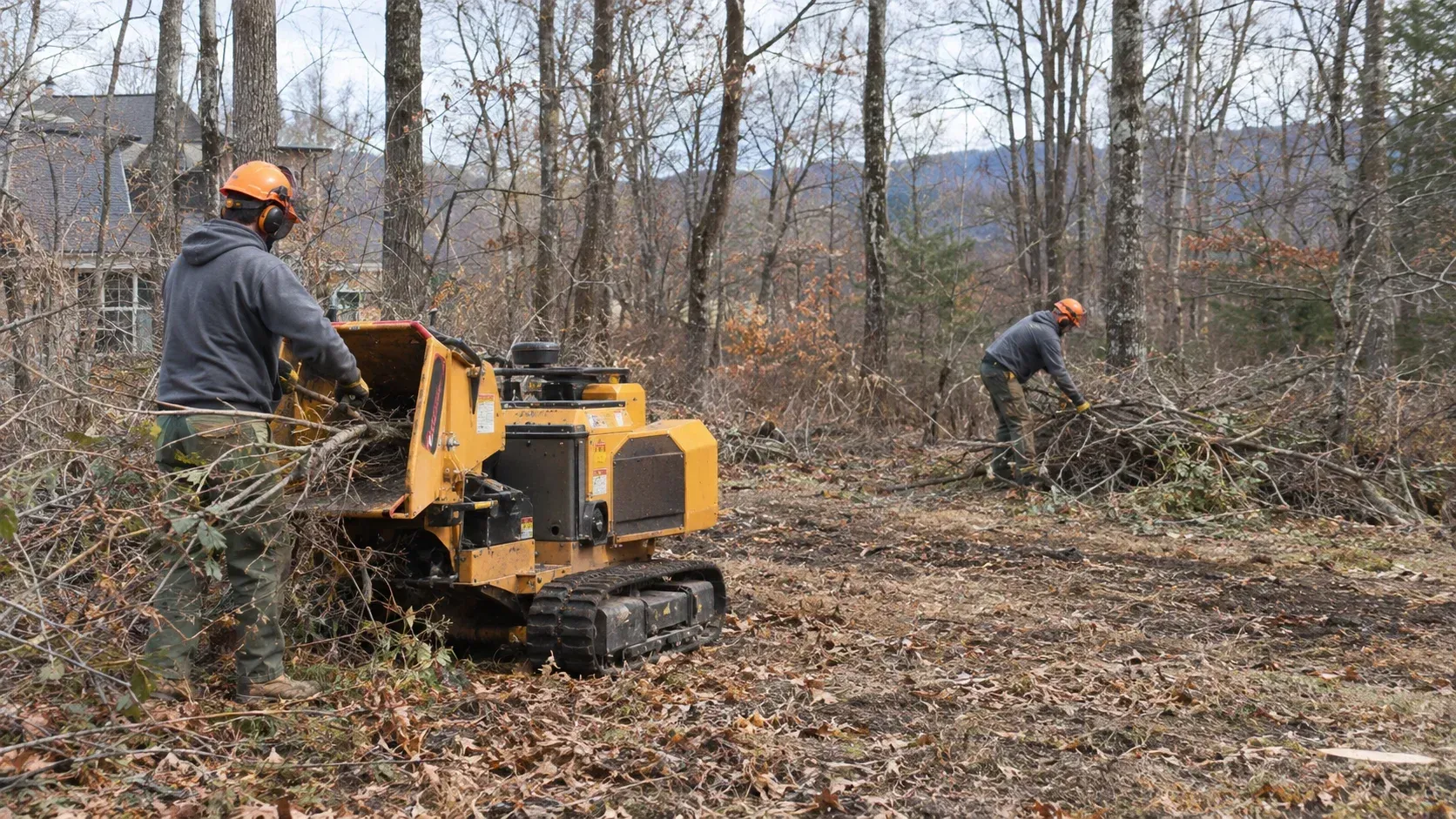
A mulching machine grinds standing brush and small trees into chips that stay on the ground. It is fast, avoids haul off costs, and leaves a walkable surface, which makes it popular for view corridors, trails, and pasture reclamation. Its limits are real, though. It does not remove stumps below grade, and it is not suited to large diameter trees.
Brush Removal as a Standalone Job
Plenty of Pocono properties do not need trees touched at all, just years of undergrowth pushed back. Standalone brush removal is the least expensive category of clearing work, and for fire safety and tick control around a home, it is often the job that matters most.
Costs That Surprise People
A few line items catch first time buyers off guard, so they are worth knowing before quotes arrive.
Stumps are the most common one. Cutting a tree and removing its stump are separate tasks, and stump grinding typically prices per stump based on diameter. On a lot with forty stumps, that line adds up, which is why it should always be spelled out in writing rather than assumed.
Permits are another. Monroe County townships have their own rules on clearing, especially near wetlands, streams, and steep slopes, and some require erosion and sediment controls before work starts. Permit costs are usually modest, but discovering a requirement mid project is not. Checking with your township before signing anything is cheap insurance.
Finally, weather and season move real costs. Frozen or dry ground supports equipment well. Spring mud does not, and soft conditions can slow a job or delay it outright.
What to Expect During the Clearing Process
A typical project starts with an on site walk through and a written estimate that spells out scope: which trees stay, whether stumps go, and where debris ends up. Vague estimates cause most clearing disputes, so the more specific the paper, the better.
Work itself moves faster than most people expect. A small residential clearing often takes one to three days, while multi acre projects run a week or more depending on hauling. Expect noise, heavy equipment traffic, and a staging area for logs and chips.
The finish line depends on what you asked for. Clearing alone leaves rough ground. If you need a graded, seed ready surface, that is additional work, and it belongs in the estimated conversation from the start, not after the machines leave.
Conclusion
Land clearing cost in the Poconos comes down to a short list of honest variables: how many trees, how big, how steep and rocky the ground, how hard the access, and where the debris goes. The $1,500 to $6,000 per acre range covers most projects, but the only number that means anything for your property is a written estimate from someone who has walked it.
The best position to be in is informed. Know your township's rules, decide which trees you actually want to keep, think through whether you need to build ready ground or just open space, and get the full scope in writing. Owners who do that homework tend to compare quotes accurately and avoid the mid project surprises that turn a straightforward job into a frustrating one.
Trying to Budget for That Overgrown Lot?
If you are staring at a wooded parcel near Stroudsburg and trying to turn it into a real number, a walk through is the fastest way to get one. Estimates are free, and there is no obligation attached to asking.
Contact McIntyre's Tree Service or call (610) 762-0660, and a local crew member will look at your land, explain the options, and give
Frequently Asked Questions
How much does it cost to clear one acre of wooded land in the Poconos?
Most wooded acres fall between $3,000 and $6,000 to clear, depending on tree size and density. Lightly brushed ground can cost less, while steep, rocky lots with large hardwoods and full stump removal can cost more.
Is it cheaper to clear land in winter?
Sometimes. Frozen ground supports heavy equipment well and protects lawns and driveways from rutting, and some contractors have more open schedules in the off season. Deep snow works the other way, so late fall and early winter are often practical windows in the Poconos.
Does land clearing include stump removal?
Not automatically. Many quotes cover cutting trees to grade and leave stumps in place unless grinding or grubbing is listed. Always confirm in writing whether stumps are included, since removing them later is a separate expense.
Do I need a permit to clear land in Monroe County?
It depends on your township and the site. Clearing near wetlands, streams, or steep slopes often triggers erosion and sediment control requirements, and some municipalities regulate tree removal beyond a certain scale. Contact your township office before work begins to confirm what applies.
What is the cheapest way to clear land?
Forestry mulching and standalone brush removal are usually the least expensive methods because nothing gets hauled away. They work well for opening up overgrown ground, but they leave stumps and are not suitable when the land needs to be ready for construction.
Related Posts