When Should You Call a Tree Service in the Poconos Instead of DIYing It?
Key Takeaways
- Call a tree service when a job involves a chainsaw above shoulder height, climbing, a large or dead tree, or anything near power lines or your house.
- Small pruning you can reach from the ground is usually a reasonable homeowner task. Most everything above that carries real risk.
- Storm-damaged trees are one of the most dangerous DIY traps because broken limbs hold hidden tension and can snap back.
- Professionals bring more than muscle. Training, rigging, insurance, and cleanup are all part of what you are paying for.
- When you are unsure, an assessment costs little and often tells you whether the job is safe to handle yourself or not.
Introduction
You should call a tree service any time the job involves climbing, a chainsaw above shoulder height, a large or dead tree, or work near power lines or your home. If the task is small pruning you can safely reach with both feet on the ground, doing it yourself is usually fine.
That line matters because tree work sends thousands of people to the emergency room every year, and homeowners make up a large share of them. The Poconos add their own wrinkles: tall hardwoods, steep lots, and storms that leave trees damaged in ways that are hard to read from the ground. Knowing which side of the line your job falls on protects both you and your property. This guide lays out where DIY makes sense and where professional tree removal is the safer call.
The Simple Rule for Deciding
Most tree decisions come down to one question: can you finish the job with both feet on the ground and no chainsaw over your head? If yes, it is often a reasonable DIY task. If no, it is usually time to call someone.
That rule is not perfect, but it filters out the situations where people get hurt. The moment a job requires a ladder, a climb, or cutting overhead, the risk climbs faster than most homeowners expect.
Why the Poconos Make This Harder. Trees here are big. Mature oaks, maples, and hemlocks tower over homes built into old forest, and a limb that looks small from the yard can weigh hundreds of pounds. Height, weight, and slope all stack the odds against a DIY attempt on anything sizable.
Tree Work That Is Usually Safe to DIY
Plenty of routine care is fine to handle yourself, as long as you stay within reach and use the right tools.
Light pruning of small branches you can reach from the ground fits this category. So does clearing small saplings, trimming shrubs, and raking up leaves, twigs, and light debris after a storm. These are low tools, low height, and low risk.
Keep These Limits in Mind. Even simple pruning has boundaries. Do not cut anything you have to reach with a ladder, and stop before you take so much off a tree that you stress it. If you find yourself reaching, stretching, or standing on something unstable, that is the signal to put the saw down.
When You Should Call a Professional
Some jobs belong with a trained crew, full stop. These are the ones where the consequences of a mistake are severe.
Large or Tall Trees. Any tree big enough that you cannot control where it falls is a professional job. Full-sized tree removal near a house, fence, or driveway requires rigging and directional felling that homeowners are not equipped to do safely.
Dead, Leaning, or Damaged Trees. Dead wood is unpredictable. It breaks without warning, and a leaning or storm-damaged tree can shift the instant you cut it. Dangerous tree removal like this is exactly where trained crews earn their keep, because they read the tension and plan the cuts before touching a saw.
Anything Near Power Lines. This one has no gray area. A tree or limb touching or near a power line is a serious hazard, and contact can be fatal. Never attempt this yourself. A tree near power lines needs a professional, and often the utility company as well.
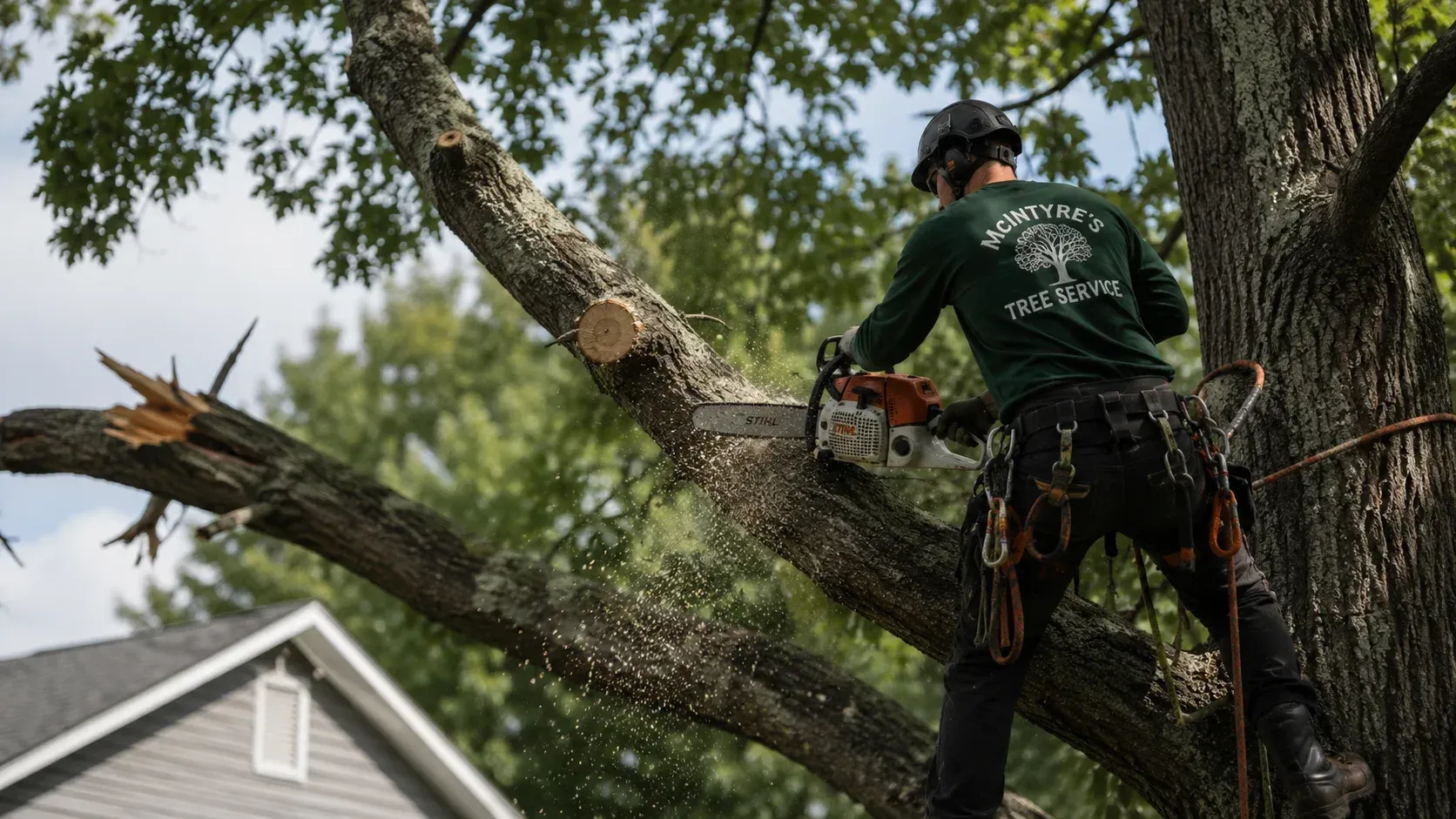
Work That Requires Climbing. If a job cannot be done from the ground, it needs someone trained in climbing and rigging with proper safety gear. Falls are among the most common and most serious tree work injuries.
The Real Risks of DIY Tree Removal
It helps to be honest about what actually goes wrong, because the dangers are not obvious until you are in the middle of them.
Chainsaws are the first one. Kickback happens fast, and a running saw at chest or head height leaves little room for error. Most homeowners have not been trained to handle one under load in a tree.
Falling limbs and trunks are the second. Trees rarely fall exactly where you expect, especially if they are leaning, decayed, or tangled with other trees. A misjudged drop can hit a house, a car, a person, or the power line you forgot to account for.
The Hidden Danger of Storm Damage. Storm-damaged trees deserve their own warning. Broken and hanging limbs are often under enormous tension, and cutting the wrong one can send it whipping back with force. What looks like simple cleanup can turn into a serious injury in a second.
What a Tree Service Provides Beyond the Cutting
Hiring a pro is not just paying someone to do work you could do slower. You are paying for things that are hard to see in the final result.
Training and experience come first. A crew reads a tree's lean, weight, and weak points before cutting, and plans the sequence so nothing lands where it should not. That judgment is the actual product.
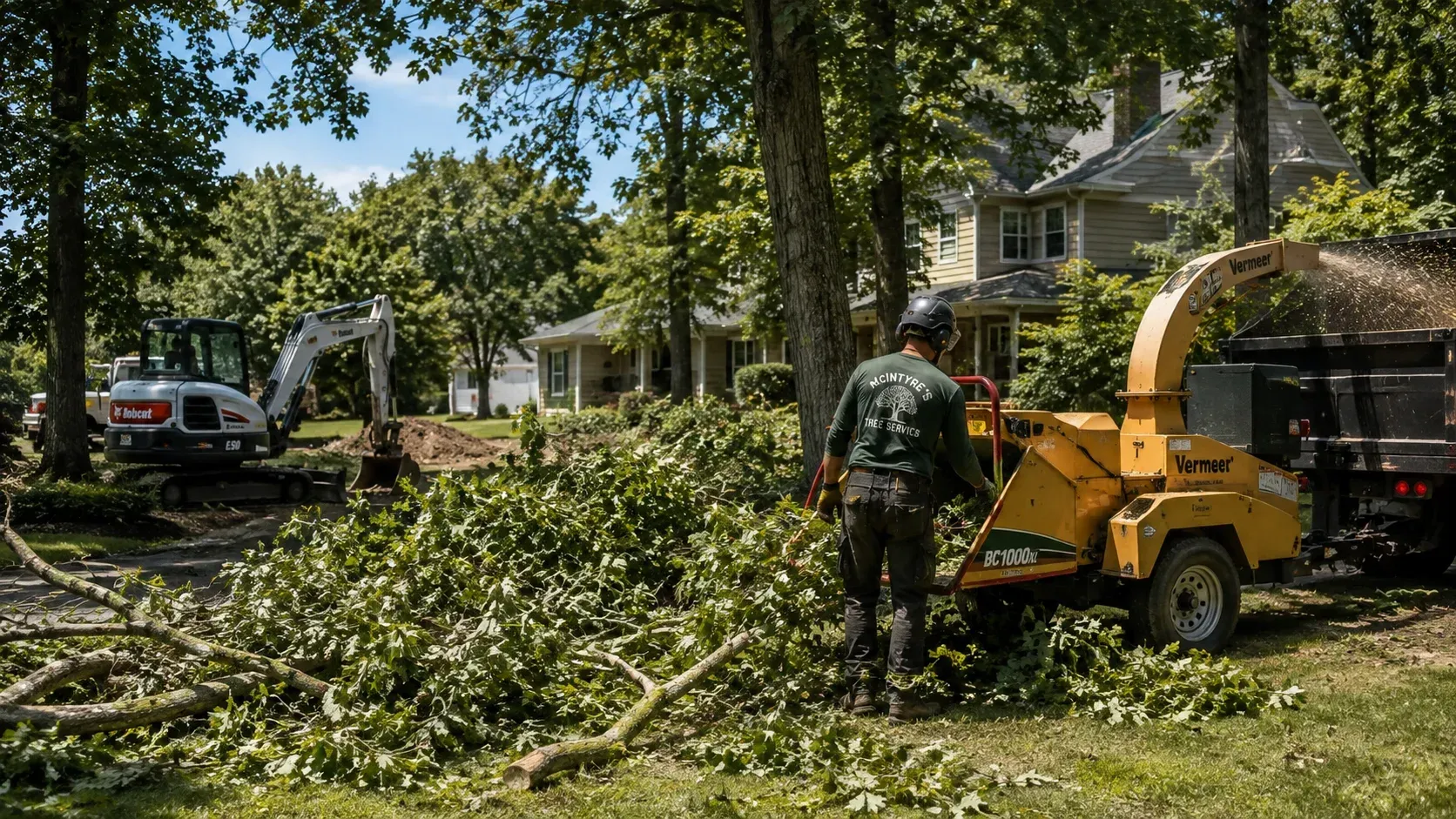
Equipment is the next piece. Bucket trucks, climbing gear, rigging, and commercial saws let a crew do safely what a homeowner cannot do at all. And when the work is done, complete cleanup usually comes with it, so you are not left hauling logs and brush for a week.
Cost, Insurance, and Liability
DIY looks cheaper on paper, but the math is not always in your favor once you account for risk.
A professional job includes insurance. If something goes wrong on your property during the work, a properly insured company carries that liability. If you do it yourself and a tree hits your house or your neighbor's, that cost lands on you.
Ask Before You Hire. When you do call a company, it is fair to ask whether they carry liability and workers compensation insurance. A reputable service will answer without hesitation. That single question separates serious operators from people working out of a pickup with no coverage.
Conclusion
The decision between DIY and calling a tree service is mostly about honesty with yourself. Small pruning within reach is a fine weekend task. Large trees, dead or damaged wood, anything requiring a climb, and anything near power lines are not, no matter how much you want to save the money.
The Poconos raise the stakes with big trees, steep ground, and storms that leave hidden hazards behind. When a job sits in the gray zone, the responsible move is to get it looked at before you climb a ladder or start a saw. A few minutes of expert eyes usually tells you whether the work is safe to handle or better left alone.
Staring at a Tree and Not Sure If It's a DIY Job?
If you are looking at a tree and cannot tell whether it is a safe weekend project or something that needs a crew, an on-site look will settle it. Assessments and quotes are free, with no pressure to book. Contact McIntyre's Tree Service or call (610) 762-0660, and someone will walk your property, tell you honestly what the job involves, and let you decide from there.
Frequently Asked Questions
When should I call a tree service instead of doing it myself?
Call a professional whenever the job involves climbing, a chainsaw above shoulder height, a large or dead tree, or any work near power lines or structures. Small pruning you can reach from the ground is usually safe to handle yourself.
Is DIY tree removal really that dangerous?
It can be. Tree work causes thousands of injuries each year, often from chainsaw accidents, falls, and limbs landing in unexpected places. Large or damaged trees are the highest risk, which is why they are generally left to trained crews.
Can I remove a small tree myself?
Often, yes, if it is small enough that you can control where it falls, there are no structures or power lines nearby, and you can do the work from the ground. Once a tree is tall enough to reach a house or line, it becomes a professional job.
What should I do about a tree touching a power line?
Stay away from it and do not attempt any cutting. Contact between trees and power lines can be fatal. Call a professional tree service and, in many cases, your utility company, since they may handle lines they own.
Why is storm damaged tree work so risky to DIY?
Broken and hanging limbs are often under heavy tension and can snap back violently when cut. Damage is also hard to assess from the ground, so what looks like simple cleanup can hide a serious hazard.
Does hiring a tree service include cleanup?
Most professional services include debris cleanup as part of the job, though it is worth confirming in the estimate. Cleanup and hauling are time consuming tasks that homeowners often underestimate when weighing DIY.
How do I know if a tree company is safe to hire?
Ask whether they carry liability and workers compensation insurance, and whether they have trained, experienced crews. A reputable company will answer these questions directly and provide a written estimate before starting work.
Related Posts