Got a Tree Problem? What Tree Services Do Poconos Homeowners Really Need?
Key Takeaways
- Most Poconos homeowners need one of five core services: trimming and pruning, tree removal, stump grinding, brush removal, or land clearing.
- Pruning is the service people need most often and put off most often. It keeps trees healthy and reduces storm damage risk.
- Removal is for trees that are dead, hazardous, or growing too close to a home, not for every tree that drops leaves or looks messy.
- Tree topping is widely discouraged by arborists and only fits a narrow set of situations, so it deserves a careful conversation before you agree to it.
- The right starting point is an honest assessment. A trained eye can often tell you a tree needs less work than you feared, or catch a problem you missed.
Introduction
Most Poconos homeowners need one of a handful of tree services: trimming and pruning, tree removal, stump grinding, brush removal, or land clearing. Which one you need depends on whether your tree is healthy and just overgrown, damaged and risky, or already gone and leaving a stump behind.
That distinction matters because tree work is not cheap, and paying for the wrong service is a common mistake. A tree you thought needed to come down might only need pruning, and a tree you have been ignoring might be the real hazard. Knowing what each service does, and when it applies, helps you spend on the right thing. This guide walks through the residential tree care options homeowners around Stroudsburg use most, and how to tell them apart.
Start by Figuring Out What Your Tree Actually Needs
Before calling anyone, it helps to sort your situation into a rough category. Doing this saves you money and makes any estimate conversation clearer.
Ask three simple questions. Is the tree healthy but overgrown or in the way? Is it dead, leaning, or damaged? Or is it already gone and leaving stumps and brush behind? Your answer points you toward pruning, removal, or cleanup work.
Why an Assessment Comes First. You do not always have to diagnose this yourself. Many homeowners guess wrong in both directions, either panicking over a tree that is fine or ignoring one that is failing. A walk through with someone trained to read trees is often the cheapest step you take, because it tells you what you can safely skip.
Tree Trimming and Pruning: The Service Most Yards Need
Trimming and pruning is the service homeowners need most and schedule least. It means selectively removing branches to keep a tree healthy, shaped, and less likely to shed limbs in a storm.
In the Poconos, this matters more than in flatter regions. Heavy snow, ice, and summer storms roll through every year, and overgrown or dead branches are the first things to fail. Regular trimming and pruning removes that weak wood before the weather finds it.
Health Pruning Versus Clearance Pruning. There are a couple of reasons to prune. Health pruning removes dead, diseased, or crossing branches so the tree can put energy where it counts. Clearance pruning lifts limbs off a roof, away from power lines, or back from a driveway.
How Often Is Enough. Most mature trees do fine with pruning every three to five years, though young trees and fast growers benefit from more frequent attention. Over pruning is a real risk too. Taking too much at once stresses a tree, so more is not automatically better.
Tree Removal: When a Tree Has to Come Down
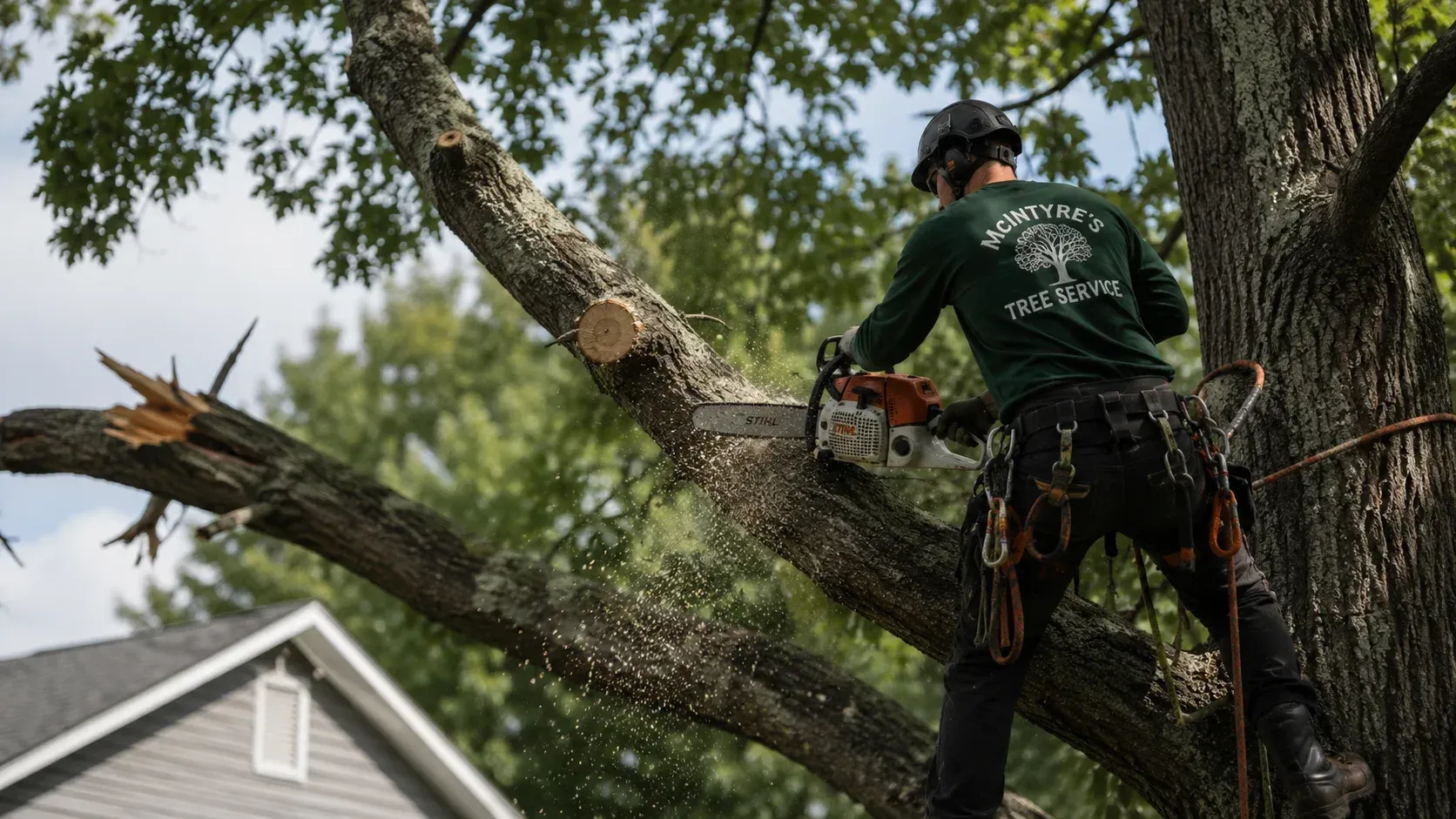
Removal is the service people reach for too fast. It is the right call when a tree is dead, structurally failing, leaning toward a structure, or growing so close to your home that its roots or limbs threaten the foundation or roof.
It is not the automatic answer for a tree that sheds leaves, blocks a little light, or simply looks untidy. Those are often pruning problems. A sound tree is an asset, and mature ones take decades to replace, so removal deserves a second opinion when you are unsure.
Signs That Point Toward Removal. A few conditions genuinely warrant it: large dead sections, a visible lean that recently worsened, deep trunk cracks, fungus at the base, or major root damage from nearby digging. When a tree like that stands over a house or driveway, professional tree removal is a safety decision, not a cosmetic one.
Why This Is Not a Do-It-Yourself Job. Large tree removal near buildings and lines carries real danger. Limbs hold tension, trees fall in unexpected directions, and homeowner injuries during self-attempted removals are well documented. This is the category where hiring trained help matters most.
Stump Grinding: Finishing the Job
Cutting a tree down leaves a stump, and removing that stump is a separate service. Grinding uses a machine to chip the stump below ground level, which lets you reclaim the space for lawn, landscaping, or a clear walking path.
Leaving a stump is not just an eyesore. It can sprout new growth, attract insects like termites and carpenter ants, and get in the way of mowing. If the ground needs to be usable, grinding is usually the practical finish to a removal.
Grinding Versus Full Removal. Grinding takes out the visible stump and upper roots but leaves deeper roots to decay naturally over time. Full root removal is more invasive and more expensive, and most homeowners do not need it unless they are building on the spot.
Brush Removal and Land Clearing: Taking Back Overgrown Ground
Not every tree job is about a single tree. Plenty of Pocono properties battle years of undergrowth, saplings, and tangled brush along the edges of the yard.
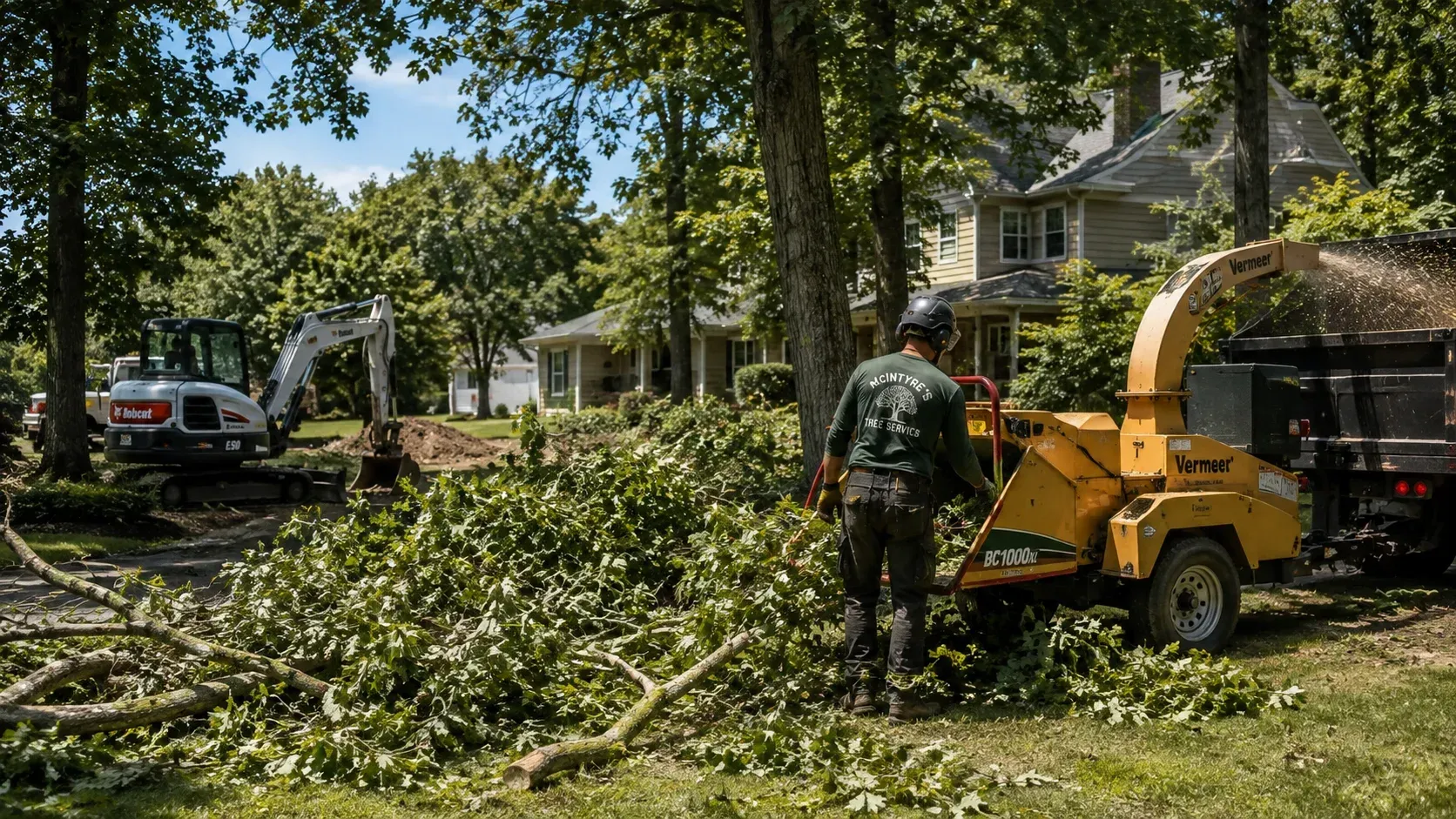
Brush removal clears that undergrowth without necessarily touching mature trees. Beyond looks, it matters for safety: dense brush against a house raises fire risk and gives ticks and rodents cover close to where people live. Regular brush removal is one of the more overlooked pieces of home maintenance in wooded areas.
When You Need Full Land Clearing. Land clearing is the bigger version, removing trees, brush, and stumps from a section of property to make it usable for a garage, a garden, a pasture, or a building site. It is a larger project than brush work and gets priced accordingly, so it helps to be clear about how build-ready you actually need the ground to be.
A Word on Tree Topping
Tree topping means cutting large branches or the top of a tree back to stubs, and it is worth being straight about it. Most certified arborists discourage topping because it stresses the tree, invites decay, and often triggers weak, fast regrowth that becomes a hazard later.
There are narrow cases where reducing a tree's height is reasonable, usually done through proper crown reduction rather than blunt topping. If a company recommends topping, ask why, and ask what the alternative would be. A good answer will explain the tradeoffs rather than brush past them.
Conclusion
For most Poconos homeowners, tree care comes down to matching the problem to the service. Healthy but overgrown trees usually need pruning. Dead or dangerous trees need removal. Leftover stumps need grinding, and overgrown ground needs brush removal or clearing. Topping sits apart as a service to approach with caution.
The smartest move is not to guess. Sort your situation into a rough category, get an honest assessment, and be wary of anyone who jumps straight to the most expensive option without explaining why. Trees are long-term assets, and the goal is keeping the healthy ones standing while dealing responsibly with the ones that pose a risk.
Not Sure Which Tree on Your Lot Needs Attention First?
If you are looking at your yard and cannot tell whether that big tree needs pruning, removal, or nothing at all, an on-site look will sort it out. Assessments and quotes are free, and there is no pressure to book anything. Contact McIntyre's Tree Service or call (610) 762-0660, and a local arborist will walk your property, explain your options in plain terms, and tell you what your trees actually need, even if that turns out to be very little.
Frequently Asked Questions
What tree services do most homeowners actually need?
The most common are trimming and pruning, tree removal, stump grinding, and brush removal. Pruning is needed most often, since it keeps healthy trees in good shape and lowers the chance of branches failing during storms.
How do I know if a tree needs to be removed or just pruned?
Healthy trees that are overgrown, blocking light, or dropping small branches usually need pruning. Removal is for trees that are dead, structurally failing, leaning toward a structure, or growing dangerously close to your home. When in doubt, get an assessment before committing.
How often should trees be trimmed in the Poconos?
Most mature trees do well with pruning every three to five years, while young or fast growing trees may benefit from more frequent attention. Timing also depends on the species and whether you are pruning for health or clearance.
Is stump grinding necessary after tree removal?
It is not required, but it is often worth it. Stumps can sprout new growth, attract insects, and interfere with mowing and landscaping. Grinding removes the stump below grade so the area becomes usable again.
Why do arborists advise against tree topping?
Topping cuts branches back to stubs, which stresses the tree, opens it to decay, and encourages weak regrowth that can fail later. Proper crown reduction is usually the better approach when a tree's height genuinely needs to be lowered.
Can I do tree work myself to save money?
Small pruning within easy reach can be a reasonable homeowner task. Large limb work, removals, and anything near power lines or structures carry serious risk of injury and property damage, so those jobs are better left to trained crews with the right equipment.
Does a dead tree always need to come down right away?
Not always, but it should be assessed promptly. A dead tree over a house, driveway, or walkway is a higher priority than one standing in an open corner of the property. The location and condition together determine how urgent removal is.
Related Posts