Emergency Tree Care: What to Do When a Tree Poses a Threat
Table of Contents
- Introduction
- Which Tree Problems Are Actual Emergencies?
- What Should You Do When a Tree Becomes an Immediate Hazard?
- What Should You Never Do During a Tree Emergency?
- Does a Hazardous Tree Always Need to Be Removed?
- What Happens During Professional Emergency Tree Care?
- How Can You Reduce the Risk of Future Tree Emergencies?
- Conclusion
- Need Emergency Tree Care in the Poconos?
- Frequently Asked Questions
Key Takeaways
- A tree emergency can involve a fallen tree, a dangerously leaning tree, major storm damage, split trunks, hanging limbs, or a tree threatening a structure or frequently used area.
- The first priority is keeping people away from the hazard. Do not approach an unstable tree simply because the visible damage appears manageable.
- Trees or branches that contact power lines require extra caution. Stay away from the area and contact the appropriate utility or emergency authorities rather than attempting to handle the hazard yourself.
- Not every damaged tree needs complete removal. Depending on the condition, professional pruning or another corrective approach may be appropriate.
- Storm-damaged trees can contain hidden structural problems, making chainsaw work and moving heavy branches particularly dangerous for untrained homeowners.
- Preventive tree services, including inspections, trimming, pruning, and timely removal of hazardous trees, can help address problems before they become emergencies.
Introduction
If a tree is leaning dangerously, has split or fallen, is hanging over a structure, or has sustained serious storm damage, keep people away from the area and arrange professional emergency tree care before attempting to move or cut the tree yourself.
For homeowners in Stroudsburg and the surrounding Poconos area, severe weather and damaged trees can turn an otherwise healthy landscape into a safety concern. A fallen tree may block access, damage a structure, or leave heavy limbs suspended above areas where people normally walk or park. The right response depends on the type and severity of the damage.
The first step is to establish a safe area around the hazard. From there, a professional assessment can help determine whether the situation calls for pruning, tree removal, cleanup, or another form of tree service. McIntyre's Tree Service provides emergency services as well as comprehensive tree services, including tree removal and trimming.
Which Tree Problems Are Actual Emergencies?
Not every tree problem requires an immediate response, but some conditions deserve prompt professional attention.
A tree has fallen or is threatening a structure
A fallen tree on a house, garage, vehicle, driveway, or other structure creates an obvious hazard. A standing tree can also become an emergency when its condition makes a fall likely and people or property are within its potential fall zone.
Keep people away from the area until the hazard can be assessed.
A tree has suddenly started leaning
A gradual lean may not mean that a tree is about to fall, but a new or worsening lean can be more concerning, particularly after severe weather. Look for other signs of instability, such as disturbed soil around the base, exposed roots, cracks, or broken limbs.
Don't try to push, pull, brace, or cut a severely leaning tree yourself.
Large branches are broken or hanging overhead
Storm-damaged branches can remain suspended even when they appear partially detached. A branch that falls unexpectedly can injure people, damage property, or create additional hazards.
The safest approach is to keep the area clear and have the damaged tree or limb assessed professionally.
The trunk is split or badly damaged
Large cracks, trunk splits, and major structural damage can compromise a tree's stability. The severity and location of the damage matter, so visible damage alone isn't always enough to determine whether removal is necessary.
The tree is dead, severely decayed, or showing extensive damage
Dead or deteriorating trees can become hazardous as their structural strength declines. Problems such as extensive deadwood, damaged bark, decay, or major fungal growth warrant professional evaluation, particularly when the tree is close to a home, driveway, or other occupied area.
A tree or branch is touching a power line
Treat this as a serious electrical hazard. Stay well away from the tree, branches, wires, and surrounding area. Do not attempt to cut the tree, move branches, or operate equipment near the lines.
Contact the appropriate utility or emergency authorities and follow their instructions before any tree work takes place.
What Should You Do When a Tree Becomes an Immediate Hazard?
When a tree presents an immediate threat, focus on safety before cleanup.
1. Keep people away
Establish as much distance as practical from the damaged tree and keep children, pets, visitors, and other people away from the area.
A tree that looks stable can contain hidden structural damage.
2. Move out of the potential fall area
If the tree is leaning or partially uprooted, don't remain underneath or beside it to inspect the damage. Move to a safer location and avoid assuming that the visible side of the tree tells you how it will fall.
3. Treat electrical hazards differently
If a tree has contacted a power line, do not approach it. Don't assume a wire is safe because it isn't visibly sparking.
Keep away and contact the utility or emergency services as appropriate.
4. Don't start cutting simply because the tree is down
A fallen tree isn't necessarily a simple cleanup job. Branches and trunks can be under tension, and cutting in the wrong location can cause material to move unexpectedly.
Professional tree work is particularly important when large trees, heavy limbs, structures, or electrical hazards are involved.
5. Contact a professional tree service
Once people are safely away from the hazard, contact an appropriate tree service to determine what needs to happen next.
McIntyre's Tree Service lists 24/7 emergency service availability and provides tree removal, trimming, pruning, and other tree services in the Poconos area.
6. Document property damage from a safe location
If a storm or fallen tree has damaged your property, photographs taken from a safe distance can help document the condition. Don't approach unstable trees or damaged electrical equipment just to obtain a better photograph.
What Should You Never Do During a Tree Emergency?
Emergency tree work is one of the situations where attempting to save money with a quick DIY solution can create a much larger safety problem.
Avoid:
- Cutting a tree that is touching or near a power line.
- Standing beneath suspended branches.
- Cutting a large storm-damaged limb without understanding how it is loaded or supported.
- Using a chainsaw on a tree that is leaning toward a structure.
- Climbing a damaged tree.
- Pulling an unstable tree or large branch with a vehicle.
- Walking beneath or around a partially uprooted tree to inspect it.
- Assuming that a tree is safe because it has already fallen.
Height, weight, structural instability, electrical hazards, and specialized equipment can make emergency tree work substantially different from routine yard maintenance.
Does a Hazardous Tree Always Need to Be Removed?
No. A hazardous tree does not automatically mean complete tree removal is the only solution.
The appropriate response depends on the tree's condition, the location of the damage, the surrounding property, and the remaining structural risk.
For example, a damaged branch may be addressed through professional pruning when the rest of the tree remains suitable for retention. In other situations, extensive damage, decay, instability, or the tree's location may make removal the more appropriate option.
A professional assessment should therefore focus on the actual hazard rather than assuming that every damaged tree requires the same treatment.
When removal is necessary, McIntyre's Tree Service states that its arborists handle tree removal projects of different sizes using specialized equipment and safety practices.
You can learn more about tree removal as part of the company's broader tree-service offering.
What Happens During Professional Emergency Tree Care?
Emergency tree work begins with understanding the hazard and determining the safest practical response.
Assessment
The condition of the tree, its location, the surrounding property, and the extent of visible damage should be considered before work begins.
Choosing the appropriate response
The goal isn't automatically to remove the entire tree. Depending on the circumstances, professional work may involve pruning damaged limbs, removing the tree, or addressing another immediate hazard.
Controlled removal when necessary
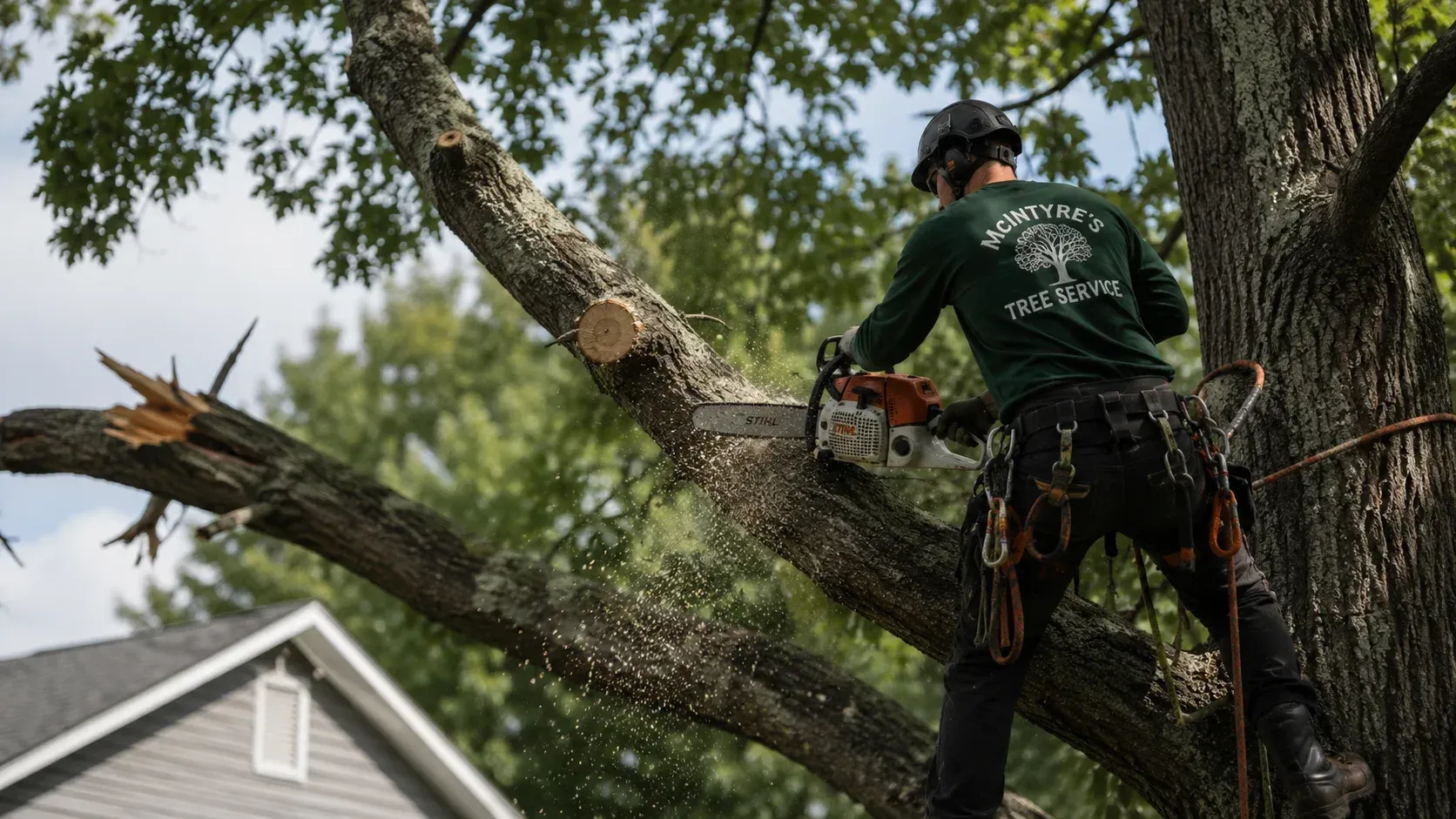
Large or hazardous trees may require specialized equipment, careful planning, and controlled cutting to reduce the risk of additional property damage.
McIntyre's Tree Service describes its tree-removal work as using experienced arborists and specialized equipment while minimizing impact on surrounding areas.
Cleanup
After emergency tree work, debris can remain across lawns, driveways, or other parts of the property. Cleanup is an important part of returning the area to a safer condition.
McIntyre provides tree removal and other related tree services throughout the Poconos area.
How Can You Reduce the Risk of Future Tree Emergencies?
Emergency tree care addresses an immediate problem, but prevention starts well before a tree falls.
Schedule tree inspections when something changes
A tree deserves closer attention when you notice a new lean, significant deadwood, large cracks, damaged roots, or major storm damage.
Address damaged limbs before they become larger hazards
Routine tree trimming and pruning can help manage damaged or problematic branches and support the tree's structural health. McIntyre's current service information specifically lists trimming and pruning among its tree-care services.
Don't ignore dead or severely damaged trees
Removing a hazardous tree before it becomes an emergency can reduce the potential for damage to nearby structures and property.
Pay attention after severe weather
A tree can look mostly intact after a storm while still having broken limbs, structural damage, or disturbed roots. A post-storm inspection can identify problems that aren't obvious from the ground.
Consider the surrounding property
A tree that might be manageable in an open part of a property becomes more consequential when it stands close to a home, driveway, power infrastructure, or another frequently occupied area.
Preventive tree care is ultimately about addressing potential hazards before they become urgent problems.
Conclusion
Emergency tree care starts with one priority: keep people away from an unstable or damaged tree until the hazard can be assessed safely.
A leaning tree, split trunk, fallen tree, hanging limb, severely damaged tree, or tree involving electrical infrastructure should not be treated like an ordinary yard-maintenance project. Avoid approaching unstable trees, don't attempt work around power lines, and don't assume that a fallen tree is safe to cut simply because it is already on the ground.
Not every hazardous tree needs complete removal, either. Depending on its condition and location, professional pruning or another corrective approach may be appropriate. When removal is necessary, specialized equipment and careful planning can help address the hazard while limiting additional risk.
For homeowners in Stroudsburg and the surrounding Poconos area, having a plan for emergency tree situations, and knowing when to call a professional—can make a difficult situation safer and easier to manage.
Need Emergency Tree Care in the Poconos?
If a storm, fallen tree, damaged limb, or other tree problem has created an immediate concern on your property, don't take unnecessary risks trying to handle the hazard yourself. McIntyre's Tree Service provides emergency tree services and can also help with tree removal, trimming, pruning, and other tree, care needs in the Poconos area.
For assistance with an urgent tree situation or to discuss your tree-care needs,
contact McIntyre's Tree Service.
Frequently Asked Questions
What qualifies as a tree emergency?
A tree emergency can involve a fallen or severely damaged tree, a tree threatening a structure or occupied area, major hanging limbs, a newly unstable tree, or a tree or branch involving a power line. When there is an immediate risk to people or property, keep away from the hazard and seek professional assistance.
What should I do if a tree falls on my house?
Keep everyone away from the affected area and avoid approaching the tree or attempting to cut it apart yourself. If there is an electrical hazard or immediate danger to people, contact the appropriate emergency or utility authorities. A professional tree service can then assess the tree and determine the safest way to address the remaining hazard.
Can I remove a storm-damaged tree myself?
Large or severely damaged trees should generally be left to trained professionals. Storm-damaged limbs and trunks can be unstable or under tension, while trees near structures or electrical lines create additional hazards. A professional assessment can determine the safest approach.
Does every hazardous tree need to be removed?
No. Removal is one possible solution, but it isn't automatically necessary in every situation. Depending on the tree's condition, location, and type of damage, professional pruning or another corrective approach may be appropriate.
How can I prevent a tree emergency?
Regular tree inspections, appropriate pruning, timely attention to dead or damaged trees, and post-storm assessments can help identify hazards before they become emergencies. Keeping trees appropriately managed around structures and other frequently used areas can also reduce the consequences if a failure occurs.
Related Posts