Is Winter the Best Time to Prune Trees in Pennsylvania?
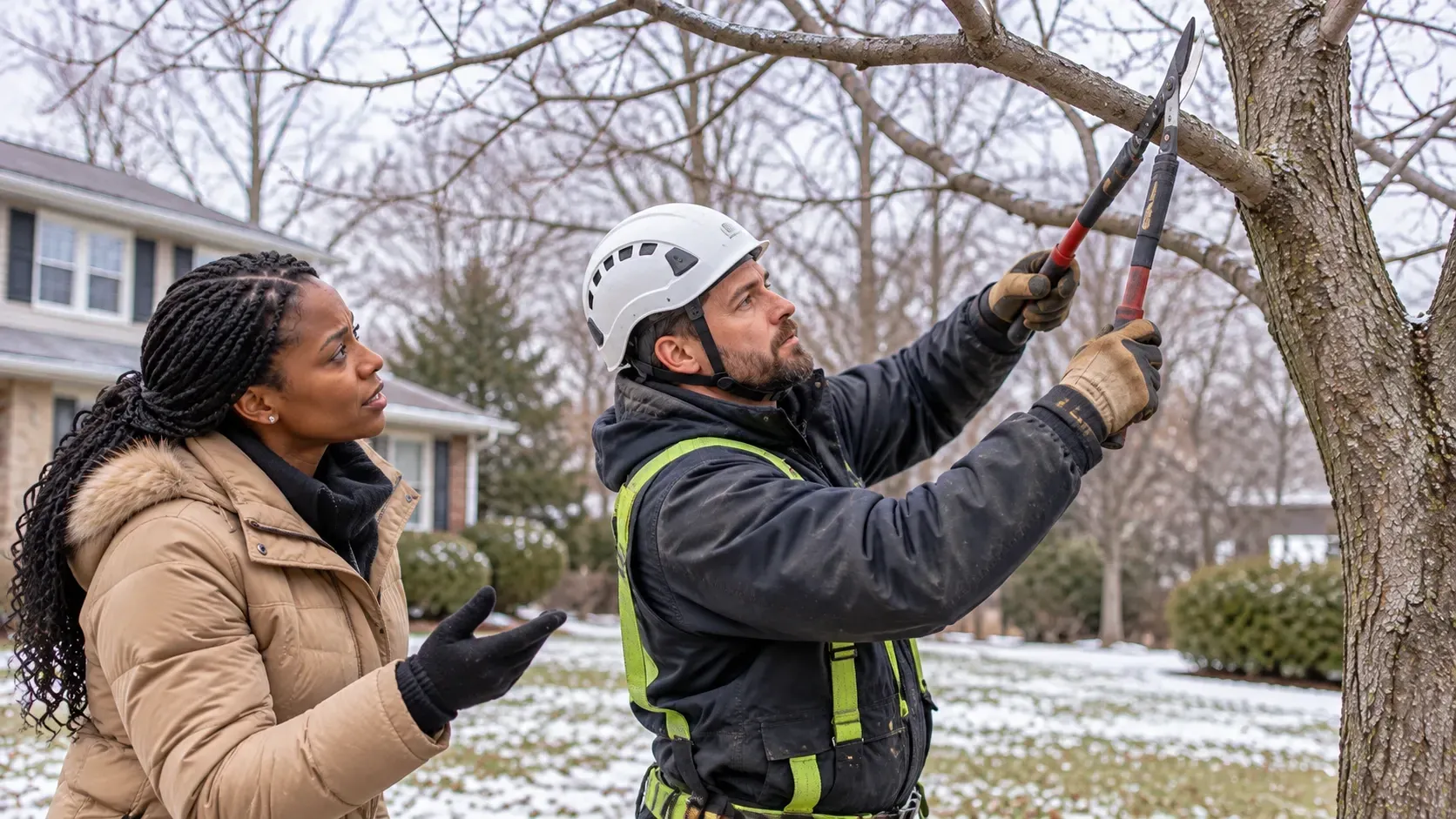
Table of Contents
- Introduction
- Why Winter Tree Pruning Works for Most Species
- What Dormancy Actually Changes
- The Trees You Should Not Prune in Winter
- Sap Bleeding Is Not Damage
- Late Winter Beats Early Winter
- What Winter Pruning Is Not
- Conclusion
- Reserve a Dormant-Season Visit
- Frequently Asked Questions
Key Takeaways
- Late winter is the best general window for most species in this region.
- Bare branches mean the person pruning can finally see what they are cutting.
- Spring-flowering trees are the big exception. Prune them in winter and you cut off the flowers.
- Sap running from a late-winter maple cut looks alarming and does the tree no harm.
- Hazardous limbs never wait for a season.
Introduction
For most species in Pennsylvania, yes, and the dormant season is generally the best window: the leaves are off so structure is visible, the insects and pathogens that move through fresh wounds are inactive, and the tree's spring push closes those cuts quickly once growth resumes.
The exceptions are real though, and they are specific. Get the species wrong and you will spend a spring looking at a tree that should have been covered in flowers.
Why Winter Tree Pruning Works for Most Species
Three reasons, and the first one is the one crews care about most.
You can see the tree. This is the practical case for winter tree pruning more than any biological one. A full canopy hides everything that matters: how limbs attach, which unions are weak, where deadwood sits, how weight is distributed. In February all of that is visible from the ground. Better decisions get made about which branch comes off, and that is most of what good pruning is.
Disease and pest pressure is low. A fresh pruning cut is an opening. The insects that carry certain tree diseases, and the fungal spores that take advantage of wounds, are largely inactive in the cold. Cutting in winter means the wound is not sitting open while all of that is moving.
The wound closes faster. Trees do not heal cuts the way skin heals. They seal them off, growing new tissue over the wound from the edges in. That growth happens when the tree is actively growing, so a cut made in late winter gets worked on within weeks. A cut made in August waits months.
What Dormancy Actually Changes
It changes what the tree can respond with, which is the part homeowners rarely hear.
A dormant tree is not asleep so much as holding. Its energy reserves are stored in the roots and the stem rather than spent on a canopy. When you remove a branch in that state, nothing is lost that the tree was currently using, and the reserves are still there to fund the response in spring.
Prune the same branch in midsummer and you are taking away leaves that were actively feeding the tree, in the season when it has the least stored energy to spare. The tree copes, but it copes from a weaker position.
This is also why dormant pruning suits structural work. Taking a significant limb, correcting a bad fork, reducing a heavy side: those are better asked of a tree that has a whole growing season ahead to respond. Our rundown of the types of pruning covers which is which.
The Trees You Should Not Prune in Winter
Short list, and it matters more than the general rule.
- Spring-flowering trees that bloom on old wood. Dogwood, redbud, cherry, magnolia, lilac. These set this spring's flower buds last summer. Prune them in winter and you are cutting off the bloom you are waiting for. Prune them right after they finish flowering instead.
- Newly planted trees. A young tree needs its leaves to establish. Keep pruning to broken or damaged wood for the first couple of seasons.
- Anything you cannot identify. If you do not know what it is, that is a reason to ask rather than a reason to guess.
Oaks are their own conversation. There is a disease-risk reason the dormant window is the conventional choice for oaks specifically, and the timing guidance shifts by region and by year. We are not going to print a date range here. Penn State Extension publishes current guidance for Pennsylvania and that is the right source for your species and your county.
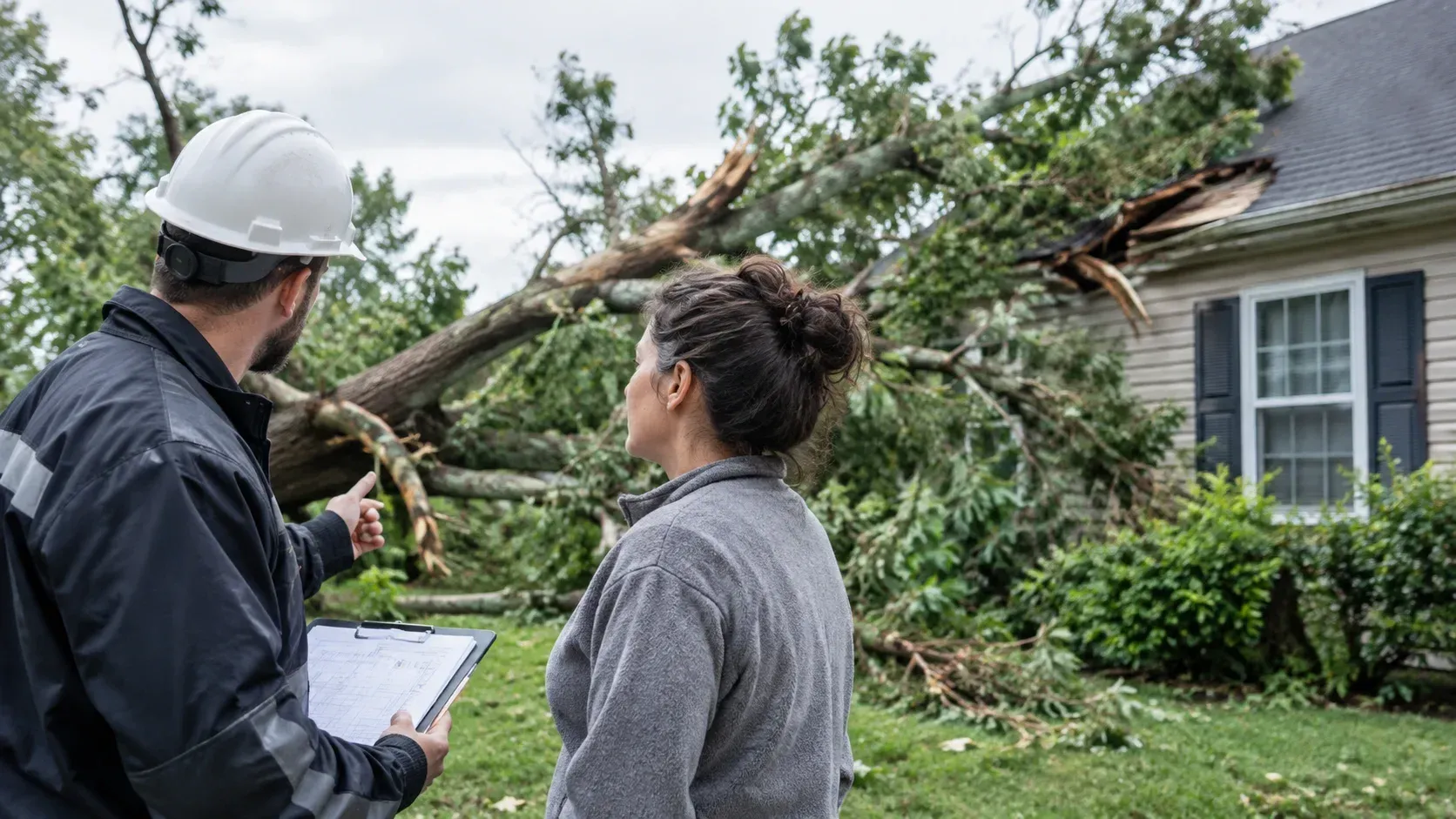
And one that overrides everything above: a hazardous limb does not wait for a season. Cracked, hanging or dead wood over a driveway or a roof comes out when it is found, in whatever month that happens to be.
Sap Bleeding Is Not Damage
Worth its own section, because this is the call we get every March.
Maples, birches and walnuts run sap heavily from late-winter cuts. The homeowner sees liquid running down the trunk from a fresh pruning wound and assumes something has gone badly wrong.
It has not. The bleeding is sap pressure, it is seasonal, it stops on its own, and it does not harm the tree. It looks dramatic and it is cosmetic.
If it bothers you, the fix is timing rather than technique: prune those species a bit later, once they have leafed out and the pressure has dropped. There is no need to seal the wound, and wound paints and dressings are not recommended for this or for anything else.
Late Winter Beats Early Winter
Within the dormant season, the back end is better than the front.
The logic follows the wound-closing point above. A cut made in early December sits open through three months of freeze and thaw before the tree can begin working on it. A cut made in late February or early March sits open for weeks.
So if the job is not urgent, the back half of winter is the better half. A December cut on a healthy tree is not a mistake. The difference just matters more on a large structural cut than on light work, and it is the one refinement worth knowing about winter tree pruning once you have the species question settled.
Weather makes this a conversation rather than a formula. Ice on the stem stops climbing. Deep snow and wind move dates. Around the Poconos the usable days in any given February are not guaranteed, which is a good argument for getting on a schedule early.
What Winter Pruning Is Not
It is not an excuse to take a lot off because the tree is dormant.
Dormancy makes a tree better able to respond. It does not make heavy removal harmless. A tree stripped hard in winter comes back with a flush of weak, crowded growth in spring, and the structure gets worse rather than better.
Reducing a tree's height is a particular case worth understanding properly before you book anything, because the method matters enormously. The difference between topping and pruning is covered in detail elsewhere on our site, and it is worth ten minutes before deciding what you want done to a tree you intend to keep.
If you are weighing what your particular tree needs, our crew will tell you in person, and plenty of the usual questions are answered in our common questions.
Conclusion
Book structural pruning for late winter and leave your spring bloomers alone until after they flower. That single split covers most of what homeowners need to know about timing. The rest is species detail worth asking about rather than guessing at, and if something overhead is cracked or hanging, ignore all of it and get that dealt with now. Timing is an optimization. A hazard is not.
Reserve a Dormant-Season Visit
Winter schedules have more flexibility than spring ones, and the trees are easier to read, so this is a good time to get planned pruning on the calendar. McIntyre's Tree Service has been working in the Poconos since 2011, with over a decade of experience, certified arborists on the team, and we are fully insured. Estimates are free and the initial inspection costs nothing. We serve Stroudsburg, Easton, Saylorsburg, Allentown and the rest of Lehigh and Monroe Counties. Call (610) 762-0660 or book a visit.
Frequently Asked Questions
Is winter the best time to prune trees?Is winter the best time to prune trees?
For most species in Pennsylvania, yes. Bare branches make structure visible, disease and insect pressure is low, and the spring growth flush closes cuts quickly. Spring-flowering trees are the main exception and should be pruned after they bloom.
What month is best for dormant pruning?
Late winter is generally better than early winter, because a cut made closer to spring sits open for less time before the tree begins sealing it. Exact timing varies by species and season, so check Penn State Extension for current Pennsylvania guidance.
Why is my maple dripping sap after pruning?
Because maples, birches and walnuts run sap under pressure in late winter. It looks alarming, it stops on its own, and it does not harm the tree. Prune those species a little later in the season if the appearance bothers you.
Can I prune my flowering dogwood in winter?
You can, but you will cut off this spring's flowers. Dogwood and other spring bloomers set their buds the previous summer, so prune them right after flowering finishes instead.
Should I wait for winter to remove a dangerous branch?
No. Cracked, hanging or dead limbs over a roof, driveway or walkway come out as soon as they are found. Seasonal timing is about optimizing tree health, not about safety work.
Related Posts