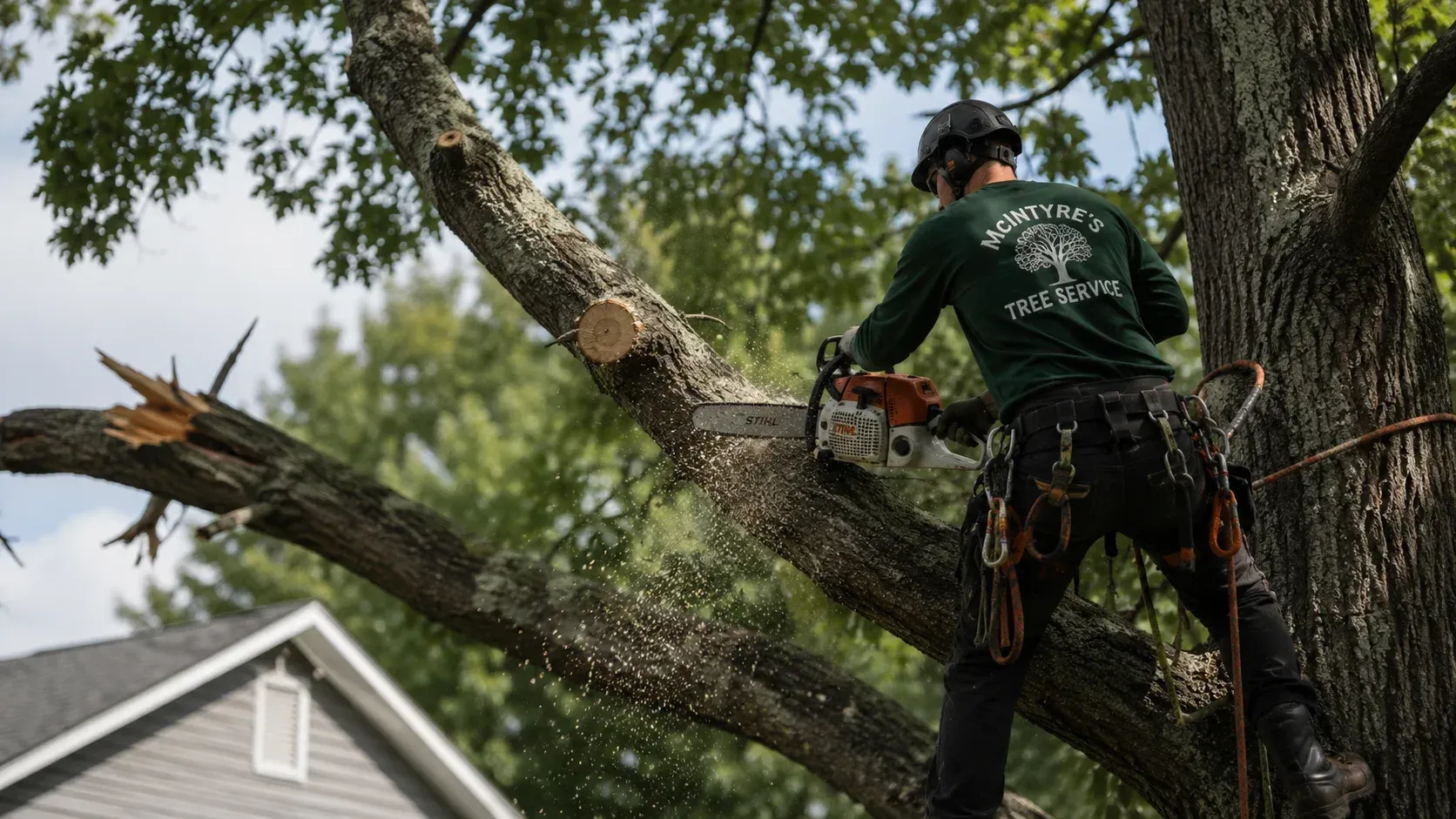
What Are the Different Types of Pruning for Trees?
Table of Contents
- Introduction
- Why Understanding the Types of Pruning Matters
- Thinning Pruning
- Crown Reduction Pruning
- Crown Raising (Crown Lifting)
- Structural Pruning
- Cleaning and Deadwood Removal
- The Different Types of Pruning Cuts
- Types of Tree Trimming vs. Pruning
- When to Prune Trees in Stroudsburg, PA
- Risks and Limitations of Improper Pruning
- Conclusion
- Book a Tree Trimming and Pruning Service
- Frequently Asked Questions
Key Takeaways
- The main types of pruning include thinning, crown reduction, crown raising, structural pruning, and cleaning.
- Each pruning method serves a specific purpose related to health, safety, and structure.
- Understanding the different types of pruning cuts helps prevent long-term damage to trees.
- Proper pruning supports tree stability, especially near homes, driveways, and power lines.
- Professional assessment is important when trees are large, mature, or located near structures.
Introduction
The different types of pruning for trees include thinning, crown reduction, crown raising, structural pruning, and cleaning, each designed to support tree health, improve safety, and guide proper growth.
For homeowners, landscapers, and property managers in Stroudsburg, understanding these methods is essential. Mature trees add beauty and shade, but without proper maintenance, they can develop weak branch structures, obstruct walkways, or create safety concerns near homes and power lines.
At
McIntyre’s Tree Service, we focus on educational guidance to help property owners understand how pruning decisions affect long-term tree health and safety. This article explains the main types of pruning and how each approach is used in responsible tree care.
Why Understanding the Types of Pruning Matters
Pruning is not simply cutting branches. It is a structured method of managing tree growth.
Different trees require different pruning approaches depending on their species, age, location, and condition. For example, a young ornamental tree in a front yard requires a different strategy than a large oak extending over a roofline.
When pruning is done correctly, it can:
- Reduce structural risk
- Improve air circulation
- Encourage balanced growth
- Minimise interference with structures
- Remove diseased or damaged limbs
When done incorrectly, pruning can weaken a tree and increase long-term risk.
Thinning Pruning
Thinning involves selectively removing branches throughout the canopy.
Purpose of Thinning
We use thinning to:
- Improve light penetration
- Increase airflow
- Reduce overall canopy density
- Decrease wind resistance
This method does not significantly change the tree’s overall size. Instead, it reduces internal crowding and weight.
When Thinning Is Appropriate
Thinning is often suitable for mature shade trees with dense canopies. In areas like Stroudsburg, where seasonal storms can bring strong winds, reducing excess canopy weight can help lower stress on branch attachments.
However, over-thinning can weaken structure. Removing too many interior branches may increase sun exposure and stress the tree.
Crown Reduction Pruning
Crown reduction decreases the overall height or spread of a tree.
Why Crown Reduction Is Used
We apply crown reduction when a tree:
- Interferes with structures
- Extends toward power lines
- Has grown beyond its intended space
- Shows signs of overextended limb weight
Instead of “topping” a tree, which can cause damage, crown reduction shortens branches back to appropriate lateral growth points.
Important Considerations
Crown reduction must be carefully planned. Removing too much height at once can stress the tree. This method is generally reserved for specific situations rather than routine maintenance.
Crown Raising (Crown Lifting)
Crown raising involves removing lower branches to provide vertical clearance.
Common Reasons for Crown Raising
We use crown raising to:
- Improve clearance over driveways and sidewalks
- Allow vehicle access
- Improve sightlines
- Reduce obstruction around structures
For families with children or active outdoor spaces, proper clearance reduces the risk of low-hanging branches causing injury.
Balance and Stability
Removing too many lower limbs can shift a tree’s weight distribution. For this reason, crown raising is usually performed gradually over time rather than in a single session.
Structural Pruning
Structural pruning focuses on developing strong branch architecture, particularly in young trees.
Purpose of Structural Pruning
We perform structural pruning to:
- Encourage a single dominant leader
- Reduce competing stems
- Improve branch spacing
- Prevent future weak attachments
Young trees benefit most from this method. Early intervention reduces the likelihood of major corrective pruning later.
Long-Term Impact
Poor early structure can result in co-dominant stems or weak junctions. Over time, these weaknesses may split during storms. Structural pruning is preventative in nature.
Cleaning and Deadwood Removal
Cleaning is one of the most common types of pruning.
What Cleaning Involves
This method removes:
- Dead branches
- Diseased limbs
- Broken or cracked branches
Deadwood removal reduces potential hazards and improves overall tree appearance.
Safety Considerations
Dead branches can fall without warning. Removing them helps reduce risk around homes, yards, and pedestrian areas.
The Different Types of Pruning Cuts
Understanding the different types of pruning cuts is just as important as understanding pruning methods.
Thinning Cut
- A thinning cut removes an entire branch back to its point of origin.
- This cut maintains natural shape and reduces canopy density without stimulating excessive regrowth.
Reduction Cut
- A reduction cut shortens a branch back to a lateral branch that can assume dominance.
- This method supports crown reduction while preserving structure.
Heading Cut
- A heading cut shortens a branch without removing it at a natural junction.
- While sometimes used in ornamental shaping, excessive heading cuts can stimulate dense, weak regrowth.
- Proper cut placement helps trees compartmentalise wounds and heal more effectively.
Types of Tree Trimming vs. Pruning
The terms “trimming” and “pruning” are often used interchangeably, but they are not identical.
- Pruning focuses on tree health, structure, and safety.
- Tree trimming may refer more broadly to shaping or size control.
When discussing professional services such as tree trimming and pruning, the goal is typically to balance both aesthetics and structural integrity.
Understanding this distinction helps property owners ask informed questions when planning maintenance.
When to Prune Trees in Stroudsburg, PA
Timing matters.
In Pennsylvania’s climate, many deciduous trees are pruned during late winter or early spring while dormant. This allows clearer visibility of structure and may reduce stress.
However, dead or hazardous branches should be addressed whenever identified. Storm damage may require prompt attention regardless of season.
Species type, health status, and local weather patterns all influence appropriate timing.
Risks and Limitations of Improper Pruning
Improper pruning can create long-term problems.
Common issues include:
- Excessive canopy removal
- Weak regrowth from topping
- Incorrect cut placement
- Removal of too many structural limbs
Large trees near homes, garages, or power lines require careful assessment. Working at height introduces additional safety considerations, and specialised equipment may be necessary. For property owners prioritising safety, particularly around children and neighbouring properties, professional evaluation reduces uncertainty and potential liability.
Conclusion
The different types of pruning for trees serve specific and important purposes. Thinning improves airflow and light penetration. Crown reduction manages height and spread. Crown raising provides clearance. Structural pruning supports long-term stability. Cleaning removes hazardous deadwood.
Each approach requires thoughtful planning and an understanding of tree biology. Improper techniques can weaken structure and create future risks.
By understanding the purpose and limitations of each pruning method, property owners can make informed decisions that prioritise safety, health, and responsible landscape management.
Book a Tree Trimming and Pruning Service
If you would like professional guidance regarding tree trimming and pruning in Stroudsburg, PA, we welcome your questions.
At
McIntyre’s Tree Service, we provide clear assessments based on tree condition, location, and long-term health considerations. For more information, you may contact us at
(610) 762-0660 or
mcintyrestreeservice@gmail.com to discuss your specific concerns and determine the most appropriate next steps.
Frequently Asked Questions
What is the most common type of pruning?
Cleaning, or deadwood removal, is one of the most common types of pruning. It addresses safety by removing broken, dying, or diseased branches.
How often should trees be pruned?
The frequency depends on species, age, and location. Many mature trees benefit from evaluation every 2–5 years, while young trees may require more frequent structural pruning.
Is tree topping the same as crown reduction?
No. Topping removes large portions of the canopy without regard to structure. Crown reduction shortens branches back to appropriate lateral growth points.
Can pruning improve tree safety?
In many cases, selective pruning can reduce certain risks by removing weak, dead, or poorly attached branches. However, no pruning method eliminates all risk.
When should I contact a professional for pruning?
If a tree is large, near structures or power lines, shows signs of disease, or has storm damage, professional evaluation is advisable to ensure safe and appropriate care.
Related Posts