How Long Do You Have to Wait Before Grinding a Stump After a Tree Is Removed in Easton, PA?
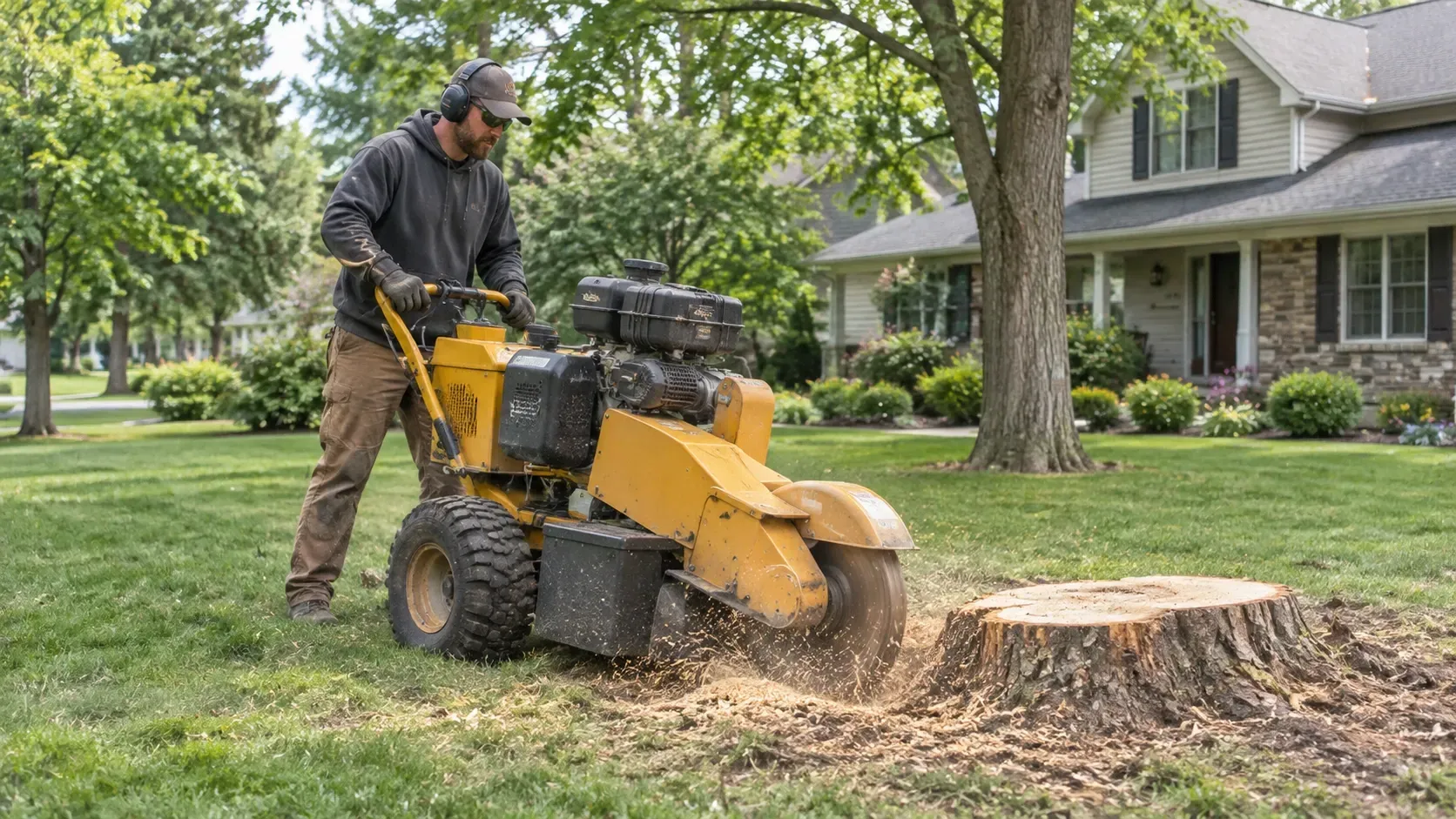
Table of Contents
- Introduction
- You Can Grind a Stump the Week the Tree Comes Down
- Why Stump Grinding Does Not Wait for Decay
- Why People Delay Stump Grinding Anyway
- What Waiting Actually Costs You
- When Waiting Is the Right Call
- What the Ground Looks Like After Grinding
- Conclusion
- Planning a Removal? Plan the Stump Too.
- Frequently Asked Questions
Key Takeaways
- There is no waiting period. The stump can come out the same week as the tree.
- Grinding cuts wood. It does not need the stump to rot first.
- A fresh stump often grinds more cleanly than one that has weathered for years.
- Waiting usually means paying for a second trip out.
- If you are regrading or building in that spot, sequence does matter.
Introduction
You do not have to wait at all, because stump grinding is a mechanical job rather than a biological one, which is why it can happen the same week the tree comes down and why our own process puts it shortly after removal.
The question comes up constantly though. That tells us homeowners are mixing this up with something else, and they usually are.
You Can Grind a Stump the Week the Tree Comes Down
A stump grinder is a wheel with carbide teeth on it, spinning fast, chewing wood into chips. That is the whole machine.
It does not care whether the wood is green or seasoned. It does not need anything to have happened to the stump first. Point it at wood and it removes wood.
What actually has to be true before grinding happens is practical rather than biological:
- The trunk and limbs have to be cleared out of the working area
- The machine has to reach the stump, which means gate widths, slope and whatever is between the street and the stump
- The ground has to be firm enough to work on without tearing up the yard
That is it. On most of the removals we do, those three conditions are met the day the tree comes down, and stump grinding follows as part of the same project rather than as a separate decision months later. Our breakdown of the takedown timeline covers how the removal half sequences.
Why Stump Grinding Does Not Wait for Decay
Because people are thinking of a different method. This is the whole source of the confusion and it is worth being clear about.
There are several ways to get rid of a stump, and most of them do involve waiting:
| Method | Does it need time? |
|---|---|
| Grinding | No. Mechanical, works immediately |
| Chemical stump remover | Yes. Works by speeding up rot, takes months |
| Burning | Yes. Needs the wood dry first |
| Letting it rot naturally | Yes. Years, and often many of them |
| Excavating the root ball | No, but it is a bigger, more disruptive job |
Somebody who has read about chemical removers or waited out a stump in a previous house arrives assuming every method has a waiting period. Grinding does not.
If anything, fresh is easier. A stump that has sat for several years weathers, and grit and sand work down into the surface of the wood, which dulls teeth faster and makes for slower, dirtier work. A stump ground the week the tree came down tends to cut cleanly.
Why People Delay Stump Grinding Anyway
Usually one of five reasons, and only two of them are good ones.
- Budget. Splitting the removal and the grinding across two invoices in two different months.
- Indecision. Not knowing yet whether that spot becomes lawn, a bed, a shed or a new tree.
- Not knowing it was an option. A surprising number of people assume there is a required waiting period, which is why this article exists.
- Ground conditions. Saturated soil in a Pocono spring is a genuine reason to hold off.
- Access. A fence that has to come apart, or a neighbour's yard to cross.
The budget reason is understandable and it is also the one that most often costs more in the end, for the reason in the next section.
What Waiting Actually Costs You
Four things, and the first is the one people do not see coming.
A second trip. The crew and the machine have to come back out. That mobilization has a cost whether the stump takes twenty minutes or two hours, and it is a cost that simply does not exist when the grinding happens as part of the original project.
A hazard in the yard. A cut stump at ankle height is something to trip over and something to hit with a mower deck. Neither of those improves with time.
Sprouts. Plenty of species push suckers from the stump and the root collar after the top is removed, and they keep coming back until the stump is gone. Mowing them does not stop it.
Unwanted tenants. A decaying stump is an attractive place for insects to move in, which our look at how grinding helps when pests move in goes through properly.
There is also a cosmetic one. Grinding leaves a patch that has to blend back into the lawn, and that blending is easier when the surrounding turf is already being worked on than it is three summers later when everything around it is established.
When Waiting Is the Right Call
We will say it plainly: sometimes holding off is correct.
You are building or regrading in that spot. If a patio, shed, driveway or retaining wall is going in there, the heavy work should happen in the right order. Grinding first and then running equipment over the area accomplishes nothing. Tell us the plan and we will sequence around it.
The ground is saturated. A grinder working on soft ground does more damage to the lawn than the stump was doing. This is a scheduling question rather than a reason to skip it.
You are planting a tree in the same spot. This one changes the job rather than the timing. A standard grind removes the stump, not the whole root system, and a new tree needs more material out and more of the chip material replaced with soil. Say so up front so it gets planned properly rather than discovered later.
Nothing is urgent and you genuinely have not decided. If the stump is in the back of the property, out of the mowing line and not bothering anybody, there is no harm in thinking about it. We would rather you decide than be pushed.
What the Ground Looks Like After Grinding
Worth knowing before, so the result is not a surprise.
Our grinding goes to approximately 10 to 12 inches below grade unless something about the site calls for otherwise, and the detail on that sits in our piece on how deep the process goes. What is left is a depression filled with a mix of wood chips and soil.
Those chips are yours if you want them, and if you do not, we take the leftover material away at no charge. Nothing chemical is involved, so the soil around the stump is not affected by the process itself.
What most people do next is top the area with soil and seed it, which is why timing stump grinding alongside other yard work is convenient. For Easton homeowners planning a bigger project, telling us the end state before we start is worth more than any instruction afterward.
Conclusion
Ask for the grinding when you book the removal, not after. There is no waiting period, the stump grinds more easily fresh than weathered, and doing it as one planned project avoids paying for a second visit that did not need to happen. The only genuine reasons to delay are wet ground, construction you have not done yet, or a replanting plan that changes the job. If none of those apply, there is nothing to wait for.
Planning a Removal? Plan the Stump Too.
Tell us what you want the space to look like when we are finished and we will plan
the takedown itself and the grinding together rather than leaving you with a stump through a season. McIntyre's Tree Service has worked in the Poconos since 2011, with over a decade of experience, certified arborists on the team, and we are fully insured. The initial inspection is free and so are our estimates, with no additional charges once the plan is agreed. We serve Stroudsburg, Easton, Saylorsburg, Allentown and the rest of Lehigh and Monroe Counties. Call (610) 762-0660 or
set it up.
Frequently Asked Questions
How long after tree removal can you grind the stump?
Immediately. There is no waiting period, because grinding is a mechanical process that cuts the wood rather than waiting for it to decay. Most of our removals have the grinding scheduled as part of the same project.
Does a stump need to rot before grinding?
No. That belief comes from chemical stump removers and natural decay, which both work by breaking the wood down over months or years. A grinder removes sound wood just as readily as rotten wood.
Is it easier to grind a fresh stump or an old one?
Fresh, usually. Weathered stumps collect grit and sand in the surface of the wood, which dulls the cutting teeth faster. A stump ground soon after removal tends to cut more cleanly.
Can I plant a new tree where the old stump was?
Yes, but say so beforehand. A standard grind removes the stump rather than the whole root system, so planting in the same spot needs more material taken out and the chips replaced with soil. That changes the job.
Do I have to take the wood chips?
No. The chips are yours if you want them for mulch or beds, and if you do not want them we remove the leftover material at no charge.
Related Posts