What Happens If a Tree Falls on Power Lines?
Table of Contents
1. Introduction
2. What Happens Immediately When a Tree Falls on Power Lines
- The Electrical Side of the Emergency
- Power Outages and Service Interruptions
3. The Three Steps to Take Right Now
- Step 1: Get Everyone Away from the Tree and Downed Wires
- Step 2: Call Your Utility Company Immediately
- Step 3: Stay Back Until Professionals Confirm the Area Is Safe
4. Why You Cannot Just Move the Tree
5. Special Situations That Require Extra Caution
- Tree on Multiple Power Lines
- Tree Also Damaging Your Home or Garage
- Tree on Lines at Night or During a Storm
6. What Happens After the Utility Company Responds
- Power Restoration
- Cost Responsibility
7. Common Safety Mistakes to Avoid
8. Need Help With a Fallen Tree Near Power Lines?
9. Frequently Asked Questions
Key Takeaways
- A tree that falls on power lines creates a serious electrical hazard and should always be treated as an emergency.
- Stay at least 30 feet away from the fallen tree and any downed or sagging power lines, and keep children and pets out of the area.
- Contact your utility company immediately and report the incident before taking any other action.
- Never touch, cut, or attempt to move a tree that is in contact with power lines, even if there are no visible sparks or your electricity is out.
- Utility crews must de-energize and secure the power lines before tree removal professionals can safely begin cleanup.
Introduction
A tree falling on power lines is an electrical emergency that can knock out power to your neighborhood, create a serious electrocution risk, and potentially start a fire. The correct response is to stay back at least 30 feet away, keep everyone away from the tree, and call your utility company immediately. Never touch a fallen tree that is in contact with power lines, and treat every downed line as live until the utility company confirms it is de-energized. Wait for professional help before any removal work begins.
When a tree falls on power lines, it creates an immediate emergency that requires staying calm and knowing exactly what to do. A tree in contact with live electrical lines poses electrocution risks, can cause widespread power outages, and in some cases leads to sparking or fire. The right response in the first few minutes after a tree falls on power lines is the key to keeping everyone safe until professionals arrive.
Understanding Stump Grinding Depth
Stump grinding is a process that uses a rotating cutting wheel to chip away the wood of a tree stump. Instead of pulling the entire root system out of the ground, the machine grinds the stump into small wood chips.
The depth of stump grinding refers to how far below the soil surface the grinder removes the stump material. The goal is to eliminate the visible portion and reduce the structural base of the stump so the area can be reused safely.
In most cases, the remaining roots are left underground and will naturally decompose over time.
What Happens Immediately When a Tree Falls on Power Lines
The Electrical Side of the Emergency
A tree making contact with power lines does several things at once. It loads extra weight on the wires, which can pull them down to dangerous heights or sag them toward the ground. If the lines have enough current running through them at that moment, they may arc or spark as the tree bridges the circuit. This sparking can ignite dry leaves, branches, or other nearby combustible materials. The lines themselves typically remain energized even after the initial contact because the power source stays active until the utility company manually disconnects it.
Power Outages and Service Interruptions
Downed power lines from a fallen tree often trigger automatic protective equipment, sometimes cutting power to a neighborhood or region immediately. However, some lines stay energized even after an outage occurs in nearby areas. This is a critical safety point: power loss does not mean the lines are safe to touch. Utility crews work to de-energize affected lines, but this takes time.
The Three Steps to Take Right Now
Step 1: Get Everyone Away from the Tree and Downed Wires
Create a safety zone of at least 30 feet around the tree and any visible downed or sagging lines. This distance accounts for the possibility of an arc or sudden electrical behavior. Keep children and pets well away. Do not let anyone approach to investigate or to try moving the tree, even if it looks harmless or the sparking has stopped.
Step 2: Call Your Utility Company Immediately
Report the tree on power lines right away. Provide your address, describe what you see, and note whether anything is sparking or on fire. The utility company will dispatch a crew to de-energize the line and confirm it is safe. This call is the single most important action you can take. Make this call before considering any other steps.
Step 3: Stay Back Until Professionals Confirm the Area Is Safe
Once you have called the utility company, your job is done. Do not move the tree, do not touch it, do not remove branches, and do not attempt any cleanup. Utility crews will address the line itself and confirm when it is safe. Tree removal professionals can then take over once the electrical hazard has been eliminated.
Why You Cannot Just Move the Tree
Downed lines may look inactive or harmless, but they can carry enough electrical current to cause severe injury or death. The risk does not depend on whether you see sparking, hear buzzing, or notice other signs. Every downed line that touches a tree should be treated as live until the utility company confirms otherwise. Moving the tree while it is still in contact with a live line can complete a circuit through your body, causing electrocution.
Metal objects make this risk even worse. If the tree is near a metal fence, gate, or other conductive material, contact with these objects while near a downed line dramatically increases danger.
Special Situations That Require Extra Caution
Tree on Multiple Power Lines
If the tree is touching more than one line, the hazard multiplies. Multiple lines can create multiple paths for electrical current. Treat this as even more dangerous and stay farther back.
Tree Also Damaging Your Home or Garage
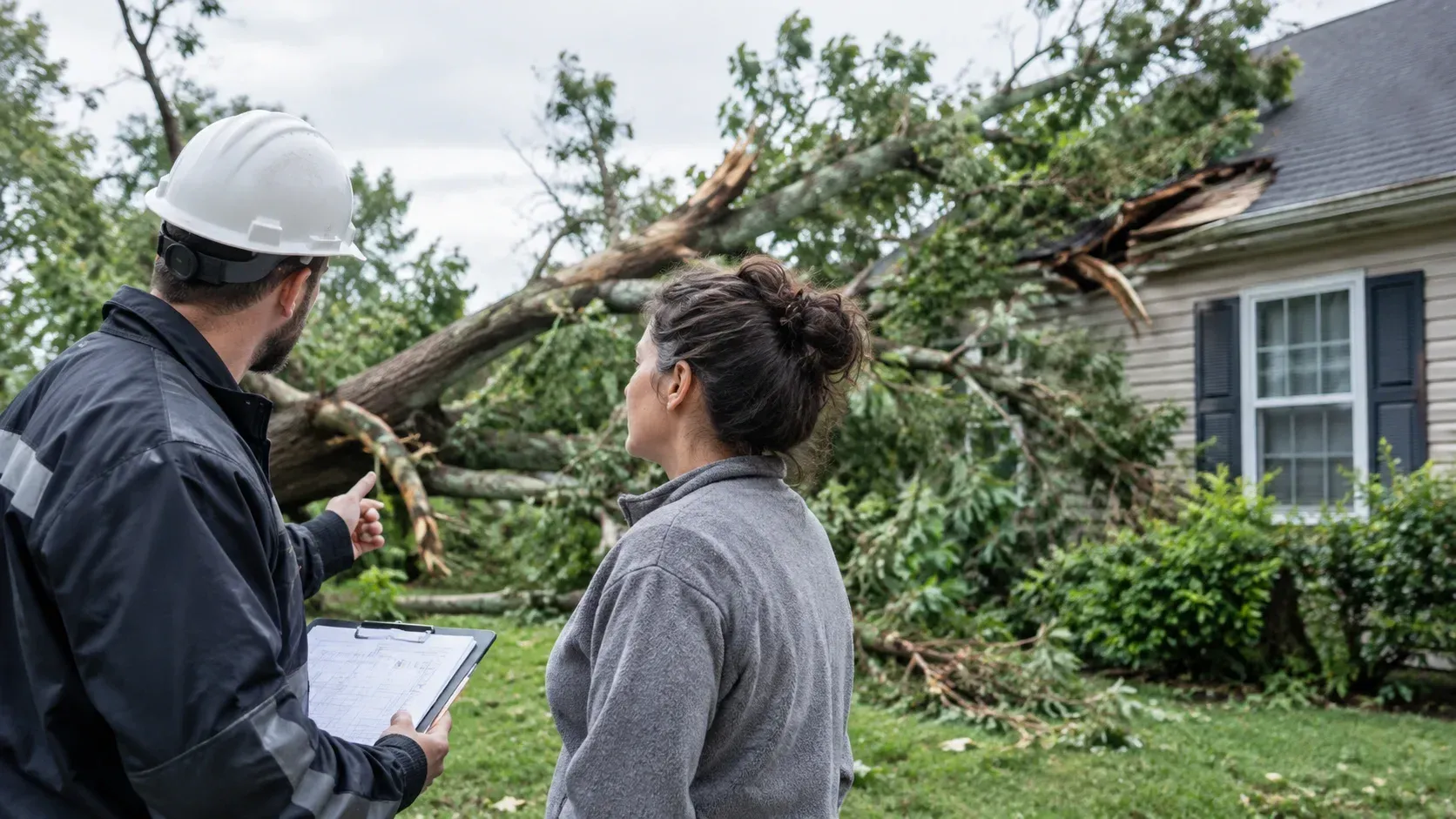
If the tree has also damaged your house, the situation is complicated but your immediate priority remains the same: stay back and call the utility company. Do not enter the structure if power lines are involved. Wait for professionals to confirm the area is safe before assessing building damage.
Tree on Lines at Night or During a Storm
Poor visibility makes the situation even more hazardous. Stay back farther than you normally would and mark the danger zone if possible with lights or barriers to keep others away.
What Happens After the Utility Company Responds
Utility crews will inspect the downed line, de-energize it if necessary, and make repairs or arrange for replacement. They may coordinate with tree removal professionals if the tree needs to be moved to access the line. Only after the utility company has confirmed the line is safe should any tree removal begin.
Power Restoration
Power restoration happens separately from tree removal. The utility company handles the line; once it is safe and repaired, they restore power. Tree removal comes afterward.
Cost Responsibility
In most cases, the property owner is responsible for removing the tree from their own property, even if the tree caused the damage to the power line. Homeowners insurance may cover this cost, but check your policy. The utility company covers repairs to the line itself.
Common Safety Mistakes to Avoid
- Never assume a downed line is safe because it is not sparking or visibly active.
- Do not delay calling the utility company while trying to assess the situation yourself.
- Never touch the tree, metal objects near it, or anything in contact with the downed line.
- Do not go near the tree to photograph it or investigate, no matter how safe it appears.
- Never cut branches or try to free the tree before the utility company has cleared it.
- Do not assume lights being out means the line is de-energized. Lines can carry current independently of whether homes have power.
Need Help With a Fallen Tree Near Power Lines?
If a tree has come down near power lines on your property, our team can assist with removal once the area has been confirmed safe by the utility company. Reach out via email at mcintyrestreeservice@gmail.com or call 610-762-0660 to discuss your situation.
Frequently Asked Questions
What is the first thing we should do if a tree falls on power lines near our home?
We should stay back, keep others away from the area, and contact our utility company right away to report it.
How do we know if a fallen tree on power line is dangerous?
We should treat every downed line as live, even if it appears quiet, until the utility company confirms it is safe.
Can we clear branches ourselves if they are only resting on the line?
No, anything touching a power line should be left for the utility company and tree professionals to address safely.
Why does stump grinding depth vary between properties?
Depth varies due to soil type, stump size, tree species, and the intended future use of the land.
What should we do if the tree also fell on our house or garage?
We should still avoid the area until the utility company confirms the line is safe, then arrange for tree removal and any structural assessment.
Related Posts