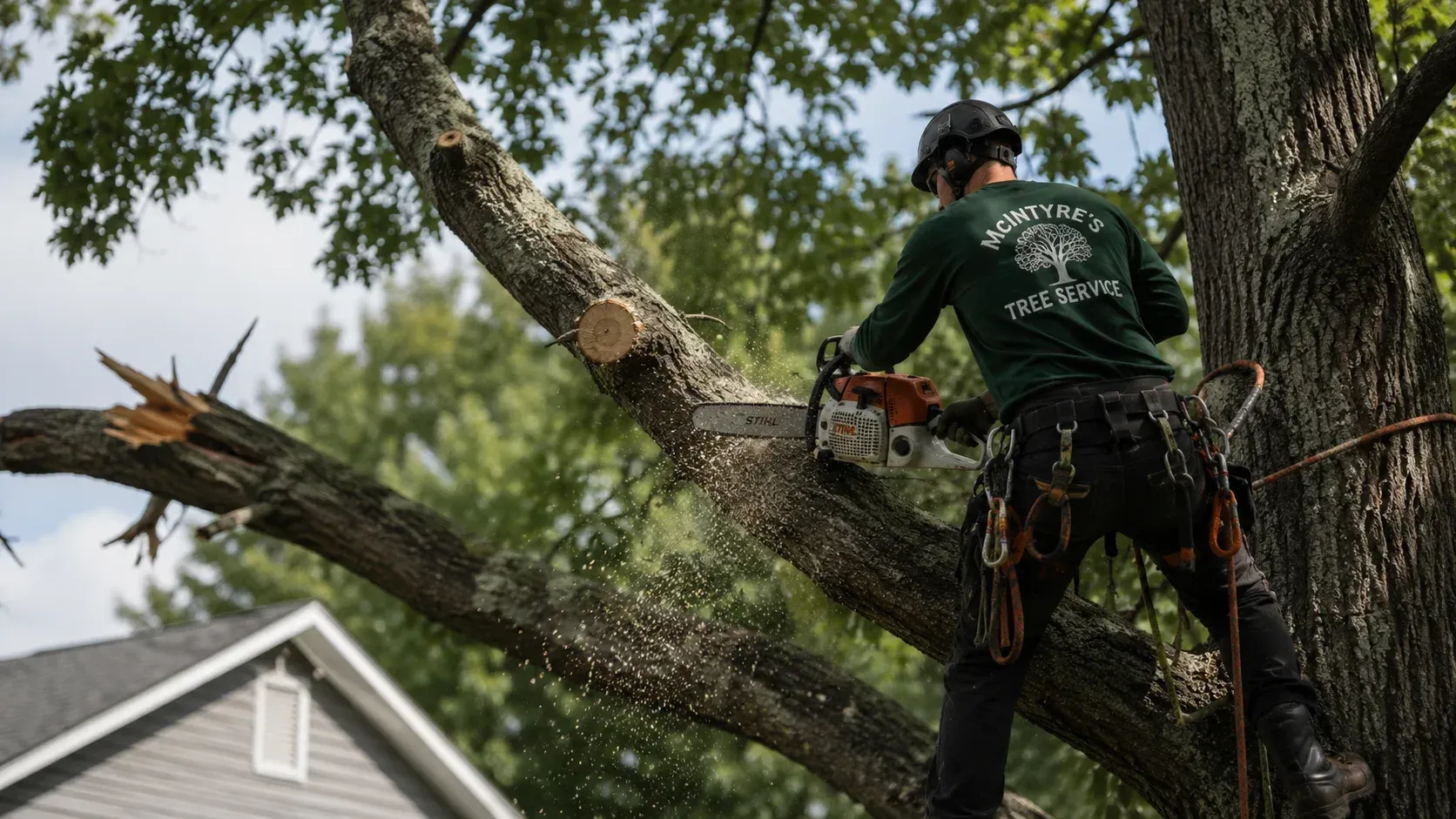
Landscaping With Native Trees in the Poconos: Benefits and Best Practices
Table of Contents
- Introduction
- What Makes a Tree Native to the Poconos?
- Why Native Trees Can Be a Smart Landscaping Choice
- How to Choose the Right Native Tree for Your Property
- Where Should You Plant a Native Tree?
- How to Plant a Native Tree Correctly
- What Native Trees Need During Their First Few Years
- Pruning Native Trees Without Creating Problems
- Common Native Tree Landscaping Mistakes
- When Professional Tree Care Makes Sense
- Building a Long-Term Tree Care Plan
- Conclusion
- Need Help Caring for Your Trees?
- Frequently Asked Questions
Key Takeaways
- Native trees can complement Poconos landscapes because they are adapted to regional environmental conditions, but the best choice still depends on the specific property.
- A tree's mature size, sunlight requirements, soil conditions, root characteristics, and proximity to structures should be considered before planting.
- Planting a tree too deeply is a common mistake that can interfere with healthy root development.
- Newly planted trees still need consistent watering while they establish, even when the species is well adapted to the region.
- Mulch can help conserve soil moisture, but piling it against the trunk can create problems.
- Pruning should have a purpose, such as removing damaged branches or improving structure, rather than simply reducing the tree's size.
- Native does not mean maintenance-free. Mature trees still require observation, appropriate pruning, and attention after storms or other changes.
Introduction
Native trees can make Poconos landscapes more resilient, attractive, and supportive of local wildlife when they are selected and planted according to the conditions of the property.
For homeowners in Stroudsburg, Saylorsburg, Monroe County, Easton, and surrounding communities, native trees can be an appealing way to add shade, seasonal interest, privacy, and long-term landscape value without treating the yard as a completely separate environment from the surrounding woodland. We work throughout the Poconos and surrounding service areas, including Stroudsburg, Easton, Saylorsburg, and Monroe County.
But there is an important distinction between choosing a native species and choosing the right tree for a particular location.
A tree can be native to Pennsylvania and still be a poor choice for a small planting area, a location beneath utility lines, compacted soil, or a spot too close to a foundation. Good landscaping starts by matching the tree to the site rather than simply selecting a species because it is native.
For established trees, appropriate maintenance matters just as much as the original planting decision. Our tree trimming and pruning services can help address dead, damaged, or poorly positioned branches while supporting the tree's long-term structure.
What Makes a Tree Native to the Poconos?
A native tree is generally a species that occurs naturally in a particular region rather than one introduced from another part of the world.
That does not mean every native tree will thrive equally well on every Poconos property.
The region contains different combinations of:
- Soil types
- Elevations
- Drainage conditions
- Sun exposure
- Moisture levels
- Slopes
- Existing vegetation
- Developed and wooded environments
Two properties only a short distance apart can therefore have very different planting conditions.
For that reason, “native” should be treated as an important starting point rather than the only selection criterion.
Native does not mean maintenance-free
This is one of the most useful distinctions for homeowners.
A native tree may be well adapted to regional conditions, but a newly planted tree still has to establish its root system. It can also be damaged by storms, develop structural problems, compete with nearby vegetation, or outgrow the location where it was planted.
The goal is not to plant a tree and forget about it.
The goal is to choose a suitable tree and give it the conditions it needs to become established.
Why Native Trees Can Be a Smart Landscaping Choice
They can support local wildlife
Native trees can provide food, shelter, nesting opportunities, and habitat for organisms that evolved alongside the region's plant communities.
That makes them useful when homeowners want their landscaping to contribute something beyond appearance.
A yard does not need to become a completely wild landscape to support wildlife. Even one thoughtfully selected native tree can become part of a larger network of plants and habitat.
They can add seasonal character
Native trees can provide changes throughout the year through:
- Spring flowers
- Summer shade
- Fall foliage
- Bark and branch structure
- Fruit or seeds used by wildlife
- Winter form
That seasonal variation can make a landscape feel more connected to the surrounding Poconos environment.
They can contribute to soil and water management
Tree roots help hold soil in place, while the canopy can intercept rainfall before some of that water reaches the ground.
The effect varies with tree size, soil, slope, weather, and the surrounding landscape, so a single tree should not be treated as a solution for every drainage or erosion problem.
Still, strategically placed trees can become part of a broader landscape-management plan.
They can provide shade and reduce heat around outdoor areas
A mature tree can provide meaningful shade, particularly when planted where its eventual canopy can cover a patio, seating area, or other outdoor space.
This benefit depends heavily on planning.
A tree planted in the wrong location may eventually shade an area where sunlight is needed, interfere with structures, or require significant pruning to keep its branches away from buildings.
The best time to think about mature canopy size is before planting, not after the tree has outgrown its space.
How to Choose the Right Native Tree for Your Property
The biggest mistake homeowners can make is choosing a tree based only on how it looks at the nursery.
Instead, evaluate the site first.
Start with the available space
Ask how much room the tree will have when mature.
Consider:
- Canopy width
- Tree height
- Root-zone space
- Distance from buildings
- Distance from driveways
- Nearby walkways
- Utility lines
- Existing trees
- Property boundaries
A small tree in a container may look perfectly manageable today while eventually becoming a large tree with a canopy several times wider than its planting area.
Plant for the mature tree, not the nursery-sized tree.
Evaluate sunlight
Different trees have different light requirements.
Observe the intended planting location throughout the day rather than assuming it receives full sun simply because it looks bright in the morning.
Nearby buildings, mature trees, fences, and changing seasonal sun angles can significantly affect the amount of light available.
Pay attention to soil and drainage
A tree's roots need an environment where water and oxygen can reach them.
That means a site that stays constantly saturated may be unsuitable for a species that prefers well-drained conditions, while extremely dry or compacted soil can create establishment challenges for another species.
Before planting, look at how water behaves after heavy rain.
Does it drain relatively quickly?
Does it collect in one location?
Is the soil compacted?
Has the area been disturbed by construction?
These observations can be more useful than choosing a tree based solely on appearance.
Consider what is already growing
Existing vegetation can tell you something about the site.
Look at nearby mature trees and plants and consider whether they are thriving, declining, or struggling.
This does not replace a proper site evaluation, but it can provide useful clues about sunlight, moisture, soil, and exposure.
Where Should You Plant a Native Tree?
The right tree in the wrong location can still become a landscaping problem.
Before planting, look upward and outward.
Keep structures in mind
Avoid choosing a location where the mature canopy will eventually crowd the roof, gutters, siding, or other structures.
You should also think about branches that could eventually extend toward the house rather than focusing only on the trunk's current position.
Look for utility conflicts
Overhead utility lines deserve particular attention.
A tree that grows into a utility corridor can require repeated pruning or become a safety concern as it matures.
If you're unsure whether a planting location is appropriate, evaluate the mature height and canopy spread before putting the tree in the ground.
Think about roots as well as branches
Homeowners often plan for the canopy but forget the root system.
Roots need space, and planting directly beside hardscape, foundations, septic infrastructure, or other sensitive areas may create future conflicts depending on the species and site.
That does not mean tree roots automatically damage foundations or sidewalks. It means the planting location should account for the tree's eventual size and growing conditions.
Plan for the view you actually want
A tree can be used to:
- Create shade
- Frame a view
- Add privacy
- Define an outdoor area
- Provide seasonal color
- Soften large areas of lawn
Determine the purpose before choosing the tree.
That makes it easier to decide whether you need a large shade tree, a smaller ornamental tree, or another type of planting.
How to Plant a Native Tree Correctly
Good planting begins before the tree goes into the ground.
1. Prepare the location
Remove competing vegetation and make sure the planting area provides enough space for the tree's expected growth.
2. Dig wide rather than excessively deep
The planting hole generally needs to accommodate the root system without encouraging the tree to sit too deeply.
The root flare should remain visible rather than being buried beneath soil.
Planting too deeply is one of the mistakes that can create problems long after the planting project is finished.
3. Check the root ball before planting
If the tree is container-grown or otherwise root-bound, inspect the roots rather than simply placing the entire root mass into the hole without examination.
The objective is to give the roots a reasonable path into the surrounding soil.
4. Backfill appropriately
Use suitable soil and avoid creating an overly loose or excessively compacted planting area.
The tree should remain stable while its roots establish.
5. Water thoroughly
Watering after planting helps settle the soil around the roots.
Newly planted trees need consistent moisture during establishment, particularly during dry periods.
6. Apply mulch correctly
Mulch can help conserve moisture and reduce competition from grass.
However, keep mulch away from direct contact with the trunk.
The familiar “mulch volcano” piled against the trunk can retain excess moisture against the bark and create other problems.
A broad, shallow mulch layer is generally more useful than a tall mound.
What Native Trees Need During Their First Few Years
A common misconception is that because a tree is native, it does not need much attention after planting.
The establishment period is different.
The tree is developing a root system while adapting to its new location. During this stage, watering is often more important than homeowners expect.
Watch the soil rather than following a rigid calendar
There is no single watering schedule that works for every property.
Weather, soil type, drainage, tree size, planting season, and rainfall all affect how much supplemental water is needed.
Check the soil and observe the tree rather than automatically watering on the same schedule regardless of conditions.
Protect the trunk and root zone
Avoid damaging the trunk with lawn equipment.
Also avoid repeatedly driving or parking heavy equipment over the tree's root zone when possible. Compaction can interfere with the soil environment that roots need.
Monitor instead of assuming
Look for changes in:
- Leaf condition
- New growth
- Branch health
- Trunk condition
- Soil moisture
- Mulch depth
- Signs of pests or disease
If something changes significantly, investigate rather than assuming the tree will recover on its own.
For additional practical guidance on maintaining trees after moving into a property, our tree care tips for new homeowners cover watering, mulching, pruning, and situations where professional care may be appropriate.
Pruning Native Trees Without Creating Problems
Pruning is sometimes treated as a way to make a tree look smaller or tidier.
That is not always the right objective.
Good pruning should have a reason.
Reasons may include:
- Removing dead branches
- Removing damaged branches
- Addressing branches that create a specific hazard
- Improving structural development
- Maintaining clearance from structures
- Managing branches that interfere with a particular use of the property
Avoid pruning simply because a tree looks too large
Trees are designed to grow.
Repeatedly cutting large portions of a healthy canopy just to keep a mature tree artificially small can create unnecessary stress and may encourage undesirable growth patterns.
The better question is:
What problem is this pruning supposed to solve?
If there is no clear answer, more cutting may not be better.
For larger trees or branches that require climbing, specialized equipment, or work near structures, professional tree trimming and pruning is safer than attempting the work yourself. Our certified arborists use industry practices to address tree health, structure, and safety.
Common Native Tree Landscaping Mistakes
Choosing a tree based only on appearance
A beautiful tree that cannot tolerate the conditions of the planting site is not a good long-term choice.
Match the tree to the property first.
Ignoring mature size
This is one of the easiest mistakes to prevent.
Research the expected mature height and canopy spread before planting.
Planting too close to structures
The trunk may appear far enough away today while the mature canopy eventually reaches the roof, siding, driveway, or utility lines.
Planting too deeply
Burying the root flare can create long-term problems with root development and trunk health.
Assuming native means drought-proof
Native species can still experience stress during unusually dry conditions, especially during establishment.
Overwatering
More water is not automatically better.
Poor drainage and consistently saturated soil can be just as problematic as insufficient moisture for species that require better-drained conditions.
Over-mulching
A thick mound of mulch around the trunk does not improve tree health.
Mulch should support the root zone without being piled against the bark.
Treating pruning as cosmetic maintenance
Removing branches without a clear objective can create unnecessary wounds or change the tree's natural structure.
When Professional Tree Care Makes Sense
Planting a small tree and maintaining its immediate surroundings may be manageable for many homeowners.
The situation changes when the work involves established or hazardous trees.
Professional assistance becomes particularly useful when:
- A tree has significant dead or damaged branches.
- Branches are close to a home or other structure.
- A tree has been damaged by a storm.
- Pruning requires climbing.
- The tree is large enough to require specialized equipment.
- Branches are close to utility lines.
- You are unsure whether a declining tree should be pruned or removed.
- Several mature trees need to be evaluated as part of a larger landscape project.
Our services include tree health assessments, pruning, tree removal, stump grinding, brush removal, and land clearing, allowing the appropriate solution to be considered based on the condition of the property rather than assuming every problem requires the same service.
Building a Long-Term Tree Care Plan
Native trees can become long-term assets to a landscape, but that benefit comes from treating them as living infrastructure rather than permanent decorations.
A practical tree-care plan can include:
After planting
Monitor watering, mulch, new growth, and general establishment.
During routine property maintenance
Look for dead branches, changes in tree condition, and conflicts with structures or utility lines.
Before and after severe weather
Inspect trees from a safe location for broken branches, leaning trunks, or other obvious changes.
As trees mature
Reassess whether their size and structure still fit the original planting location.
Before major landscape changes
If you're planning construction, grading, excavation, or significant landscaping near mature trees, consider the potential effect on their root zones before work begins.
This kind of ongoing observation is more effective than waiting until a tree becomes an obvious emergency.
Conclusion
Landscaping with native trees can add shade, seasonal interest, habitat, and long-term character to a Poconos property, but the most important decision happens before the tree is planted.
Choose a species that fits the site. Consider mature size, sunlight, soil, drainage, roots, structures, and utility lines. Plant at the correct depth, provide adequate establishment care, and avoid treating “native” as synonymous with “maintenance-free.”
As the tree matures, its needs change. Routine observation and purposeful pruning can help preserve its structure and keep it compatible with the surrounding property.
The best native-tree landscape is not necessarily the one with the most trees. It is the one where the right trees are placed in the right locations and cared for according to their actual needs.
Need Help Caring for Your Trees?
Choosing and planting a tree is only the beginning. If mature trees on your property need pruning, assessment, removal, or other professional care, we're here to help you determine the appropriate next step.
We provide tree care throughout the Poconos, including Stroudsburg, Easton, Saylorsburg, and Monroe County, with services ranging from tree trimming and pruning to tree removal, stump grinding, brush removal, and land clearing.
Contact us about your tree-care needs or call
(610) 762-0660 to discuss your property and request a consultation.
Frequently Asked Questions
Are native trees completely maintenance-free?
No. Native trees may be well adapted to regional conditions, but they still need appropriate watering during establishment, monitoring, and occasional maintenance as they mature.
How do I know which native tree is right for my property?
Start with the site rather than the tree. Consider sunlight, soil, drainage, available space, mature height, canopy spread, roots, structures, and utility lines before choosing a species.
Should I prune a newly planted native tree?
Not simply for appearance. Young trees should generally be allowed to establish, with pruning performed when there is a clear structural, health, or safety reason.
How much should I water a newly planted native tree?
Watering needs vary with rainfall, soil, drainage, tree size, and weather. Newly planted trees generally need consistent moisture while establishing, with the soil and current conditions guiding supplemental watering.
When should I hire a professional to prune a native tree?
Professional help is appropriate when pruning involves large or high branches, difficult access, storm damage, proximity to structures or utilities, or equipment that a homeowner cannot safely operate.
Related Posts