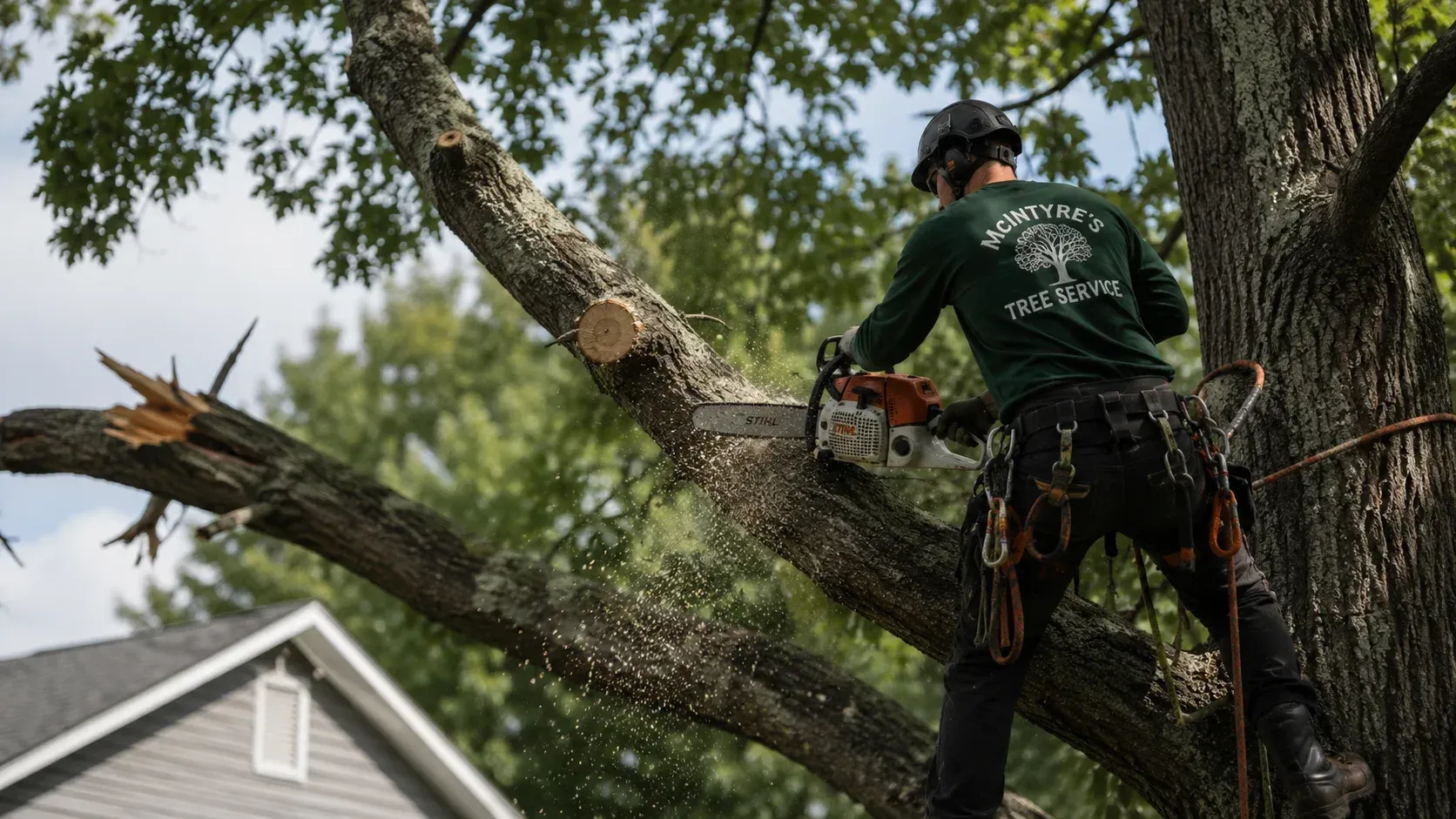
Why Brush Removal Matters for Fire Prevention and Safer Properties in the Poconos
Table of Contents
- Introduction
- Why Overgrown Brush Can Increase Fire Risk in the Poconos
- What Makes Brush and Yard Debris Dangerous During a Fire
- How to Create More Defensible Space Around Your Home
- What Homeowners Should Remove First
- Common Brush-Clearing Mistakes That Can Increase Risk
- When Brush Removal Becomes a Job for Professionals
- How Brush Removal Supports a Healthier Property
- How Often Should Poconos Properties Be Cleared?
- Conclusion
- Need Professional Brush Removal in the Poconos?
- Frequently Asked Questions
Key Takeaways
- Dry leaves, dead vegetation, fallen branches, and dense brush can provide fuel for a fire moving through a property.
- Pennsylvania identifies spring and fall as periods of heightened wildfire danger, although wildfires can occur at any time of year.
- Pennsylvania DCNR recommends thinking about wildfire protection in zones around the home rather than relying on one universal clearance distance.
- The area immediately around a house deserves particular attention because combustible vegetation and debris close to the structure can increase the chance of ignition.
- Removing brush is only part of fire prevention. Debris burning, campfires, outdoor equipment, and other ignition sources also need to be managed carefully.
- Dense brush on slopes, around trees, near structures, or across large properties can present safety challenges that make professional clearing the better option.
- Ongoing brush management is more effective than waiting until vegetation becomes heavily overgrown.
Introduction
Brush removal can reduce wildfire fuel around a Poconos property by removing accumulated dead vegetation, fallen branches, leaves, and dense growth that can help fire move across the landscape. That matters in a region where residential properties frequently meet or sit within heavily wooded surroundings.
Pennsylvania's Department of Conservation and Natural Resources identifies spring and fall as the periods of greatest wildfire danger in the state, while also emphasizing that wildfires can occur throughout the year. Dry vegetation becomes especially concerning when it combines with an ignition source and conditions that allow fire to spread quickly.
For homeowners in and around Stroudsburg, Saylorsburg, Monroe County, and the broader Poconos, the goal should not be to remove every tree or turn a wooded property into an empty yard. The more practical approach is to manage combustible vegetation strategically, especially around the home and other important structures.
If your property has become difficult to maintain because of thick shrubs, fallen branches, small trees, or accumulated vegetation, professional brush removal can help restore usable space while addressing the material that has accumulated on the property.
Why Overgrown Brush Can Increase Fire Risk in the Poconos
Brush becomes a fire concern when vegetation creates a continuous or concentrated source of fuel.
A property may contain several types of combustible material at once:
- Dead leaves and needles
- Fallen branches
- Dead shrubs
- Dry grasses and weeds
- Small dead trees
- Brush beneath larger trees
- Unmanaged vegetation along property edges
- Accumulated yard debris
- Wood piles and other combustible materials
One isolated branch is not necessarily a major concern. The problem develops when combustible materials are densely connected.
Fire needs three basic ingredients: fuel, suitable conditions, and an ignition source. Pennsylvania DCNR specifically identifies dried grass and leaves as fuel sources and lists debris burning, outdoor equipment, power lines, and campfires among common wildfire ignition sources.
That distinction matters because brush removal addresses the fuel side of the problem. It does not make a property fireproof.
A homeowner can remove a large amount of brush but still create unnecessary risk by burning yard debris during dry or windy conditions. Pennsylvania recommends checking local restrictions before burning and avoiding outdoor fires when conditions are unsafe.
Why wooded properties require a different approach
A wooded Poconos property should not automatically be treated like a suburban lawn.
Trees, shrubs, slopes, narrow access areas, and forest edges can make vegetation management more complicated. The objective is usually selective fuel reduction rather than indiscriminate clearing.
That can mean removing dead material while retaining healthy vegetation that does not create an unnecessarily continuous path for fire to reach a structure.
What Makes Brush and Yard Debris Dangerous During a Fire?
The most important question is not simply, “How much brush do I have?”
A better question is:
Where is the combustible material, and what could it connect to if it catches fire?
Vegetation immediately next to a structure deserves more attention than vegetation farther away. Pennsylvania DCNR's wildfire-prevention guidance divides the area around a home into zones:
- 0–5 feet: Keep the immediate area as free as possible from combustible materials such as dry vegetation, wood piles, and other things that can burn.
- 5–30 feet: Create space and breaks in landscaping to slow potential fire movement.
- 30–100 feet: Reduce the density of trees and brush where appropriate to slow the spread of fire toward the home.
These distances are more useful than treating “30 feet” as a universal brush-removal rule.
The appropriate treatment depends on the property, vegetation, slope, structures, and local conditions. A steep wooded property may require a different strategy from a relatively flat lot with scattered trees.
The Pennsylvania guidance also emphasizes that wildfire prevention involves more than vegetation. Removing leaves and debris, cleaning gutters, keeping firewood away from structures, and trimming overhanging branches are additional measures homeowners can take.
How to Create More Defensible Space Around Your Home
Defensible space is not simply an empty ring around a house. It is an area where vegetation and combustible materials are managed so fire has fewer continuous pathways toward the structure.
A practical property assessment can start with the house and work outward.
Start closest to the structure
Inspect the first few feet around the home for:
- Dry leaves
- Pine needles
- Dead plants
- Accumulated branches
- Wood piles
- Combustible debris
- Vegetation touching or immediately beside the structure
This area deserves priority because material located closest to the home has less distance to travel before potentially igniting combustible portions of the structure.
Work outward instead of clearing randomly
Once the immediate area has been addressed, look at the vegetation farther from the home.
Ask:
- Is there dense brush underneath larger trees?
- Are dead branches accumulating on the ground?
- Does vegetation form a continuous path toward the house?
- Are there heavily overgrown areas near driveways or access routes?
- Are property edges accumulating unmanaged vegetation?
- Are fallen trees or large branches creating concentrated fuel loads?
This approach helps homeowners prioritize work instead of treating every plant as equally problematic.
Pay attention to vertical connections
Fire can move through vegetation in more than one direction.
Low brush beneath tree canopies can create what wildfire professionals commonly described as a “ladder” of vegetation, allowing flames to move from ground-level fuels toward higher vegetation.
That means simply mowing or cutting the most visible brush may not solve the entire problem. The vegetation structure matters.
What Homeowners Should Remove First
If the entire property cannot be cleared at once, prioritize the material that presents the clearest combination of flammability, proximity, and continuity.
A useful order is:
1. Dead vegetation close to structures
Dry leaves, branches, dead shrubs, and other combustible material immediately surrounding the home should receive early attention.
2. Accumulated debris
Large piles of branches and vegetation can concentrate fuel in one location rather than distributing it naturally across the landscape.
3. Dense brush beneath trees
Where appropriate, reducing excessive understory vegetation can help interrupt continuous fuel pathways.
4. Dead or hazardous branches
Dead limbs can contribute combustible material and may also represent a separate falling-object hazard.
5. Heavily overgrown property edges
Vegetation along wooded boundaries can become important when it connects the home's landscaping to surrounding forest fuels.
This prioritization is more useful than simply saying that homeowners should “clear 30 feet.” Pennsylvania's own guidance uses multiple zones because wildfire risk changes with distance from the structure.
Common Brush-Clearing Mistakes That Can Increase Risk
Treating all vegetation as equally dangerous
Healthy vegetation does not automatically need to be removed. Over-clearing can damage the landscape without necessarily addressing the most important fuel pathways.
The better strategy is targeted vegetation management.
Leaving the debris in a large pile
Removing brush from one location only to create a concentrated pile somewhere else can shift the problem rather than solve it.
The final disposition of the material matters.
Burning brush without checking conditions or restrictions
This is one of the biggest misconceptions about brush disposal.
Pennsylvania DCNR identifies debris burning as the state's leading cause of wildfires and recommends checking local restrictions before burning.
If conditions are dry or windy, burning yard debris can be especially dangerous.
Clearing only what is visible from the house
A property can look cleaner while still containing connected fuel farther into the yard.
Walk the property rather than assessing it entirely from a window or driveway.
Ignoring difficult terrain
Brush on a steep slope is not equivalent to brush on level ground. Terrain affects access, equipment use, and how fire can move through vegetation.
A steep or heavily wooded property may require a more deliberate assessment before clearing begins.
When Brush Removal Becomes a Job for Professionals
Small amounts of manageable yard debris may be suitable for routine homeowner maintenance.
The situation changes when clearing involves:
- Large quantities of brush
- Dense wooded areas
- Steep slopes
- Large fallen branches or trees
- Dead trees
- Material near structures
- Vegetation near utility lines
- Heavy equipment
- Chainsaws or other specialized equipment
- Difficult access
- Large debris piles
The issue is not simply whether someone can physically cut the vegetation. Safe clearing requires controlling where material falls, how equipment moves across the property, how debris is handled, and what remains after the work is completed.
If brush clearing is part of a larger property project, land clearing services may be more appropriate than treating the problem as ordinary yard cleanup. The company's land-clearing service covers projects involving vegetation, debris, trees, and overgrown areas and includes planning and final cleanup.
What should never become a DIY experiment?
Homeowners should be especially cautious about combining brush clearing with tree removal, chainsaw work at height, work near electrical lines, or attempts to dismantle large fallen trees.
A brush-clearing project can quickly become a tree-removal or hazardous-tree operation.
If a tree is leaning toward a structure, suspended in another tree, partially uprooted, or damaged after a storm, it is not ordinary yard work.
How Brush Removal Supports a Healthier Property
Fire prevention is a strong reason to manage brush, but it is not the only one.
Removing excessive vegetation can also make the property easier to use and maintain.
A cleared area can provide:
- Better access around the property
- Improved visibility
- More usable outdoor space
- Easier lawn and landscape maintenance
- Less accumulated debris
- A clearer view of trees and structures
- Better access for future landscaping projects
Brush removal can also reveal conditions that were previously hidden.
Once dense vegetation is removed, homeowners may be able to identify damaged trees, exposed stumps, drainage concerns, erosion, or other landscape issues that were difficult to see through the overgrowth.
That does not mean every cleared property will automatically have healthier plants or better soil. In fact, removing vegetation indiscriminately can sometimes expose soil or disturb desirable habitat. The objective should be appropriate vegetation management, not simply clearing as much as possible.
How Often Should Poconos Properties Be Cleared?
There is no single schedule that works for every property.
A small suburban lot may need occasional cleanup, while a wooded property with rapid vegetation growth or frequent storm debris may require more frequent attention.
Instead of choosing a calendar date and ignoring the property until then, inspect it periodically.
Pay particular attention after:
- Severe storms
- High-wind events
- Periods of unusually dry weather
- Seasonal leaf drop
- Tree removal
- Major landscaping work
Pennsylvania's wildfire risk is especially elevated during spring and fall, making those useful periods for reviewing accumulated vegetation and combustible debris.
The goal is to remove problematic material before it becomes a large, difficult-to-manage accumulation.
Regular maintenance is generally easier to manage than allowing several seasons of vegetation and storm debris to build up into one large clearing project.
Conclusion
Brush removal is an important part of wildfire risk reduction for Poconos properties, but effective fire prevention is more strategic than simply cutting everything back.
Start with the areas closest to the home, remove accumulated dead vegetation and debris, break up dense fuel connections where appropriate, and pay attention to trees and brush that create pathways toward structures. Pennsylvania's wildfire guidance supports a zoned approach that gives the greatest attention to the area immediately surrounding the home.
Just as importantly, do not create a new hazard while trying to eliminate an old one. Burning brush during unsafe conditions, leaving large debris piles, or attempting hazardous tree and brush removal without the right equipment can increase risk rather than reduce it.
For properties in the Poconos, a practical maintenance plan combines routine observation, responsible debris management, and professional help when the size, terrain, or hazards exceed what can reasonably be handled by hand.
Need Professional Brush Removal in the Poconos?
If overgrown vegetation, fallen branches, or accumulated brush is making your property harder to maintain, a professional assessment can help determine what should be removed and how the work should be approached. McIntyre's Tree Service provides brush removal, land clearing, tree removal, trimming, and other tree-care services throughout the Poconos and surrounding areas.
You can
request a consultation and discuss your brush-removal needs with the team at McIntyre's Tree Service by calling
(610) 762-0660.
Frequently Asked Questions
Does brush removal completely prevent wildfires?
No. Brush removal reduces available fuel around a property but cannot eliminate wildfire risk. Homeowners should also manage ignition sources, follow local burning restrictions, and maintain the area around structures.
Should I remove all the trees around my house for fire prevention?
No. Fire prevention does not automatically require removing healthy trees. A property should be assessed for vegetation density, dead material, fuel continuity, slope, and proximity to structures before deciding what needs to be removed.
Is 30 feet of brush clearance always enough?
Not necessarily. Pennsylvania uses multiple defensible-space zones, including 0–5, 5–30, and 30–100 feet from a structure. The appropriate treatment depends on the property and surrounding conditions.
Can I burn the brush I remove from my property?
Only when permitted and when conditions are safe. Pennsylvania recommends checking local restrictions and avoiding outdoor burning during dry or windy conditions. Debris burning is a major source of wildfire ignitions in the state.
When should I hire a professional for brush removal?
Consider professional help when brush is dense, the property is steep or difficult to access, debris includes large branches or trees, vegetation is near structures or utilities, or specialized equipment is required to remove it safely.
Related Posts