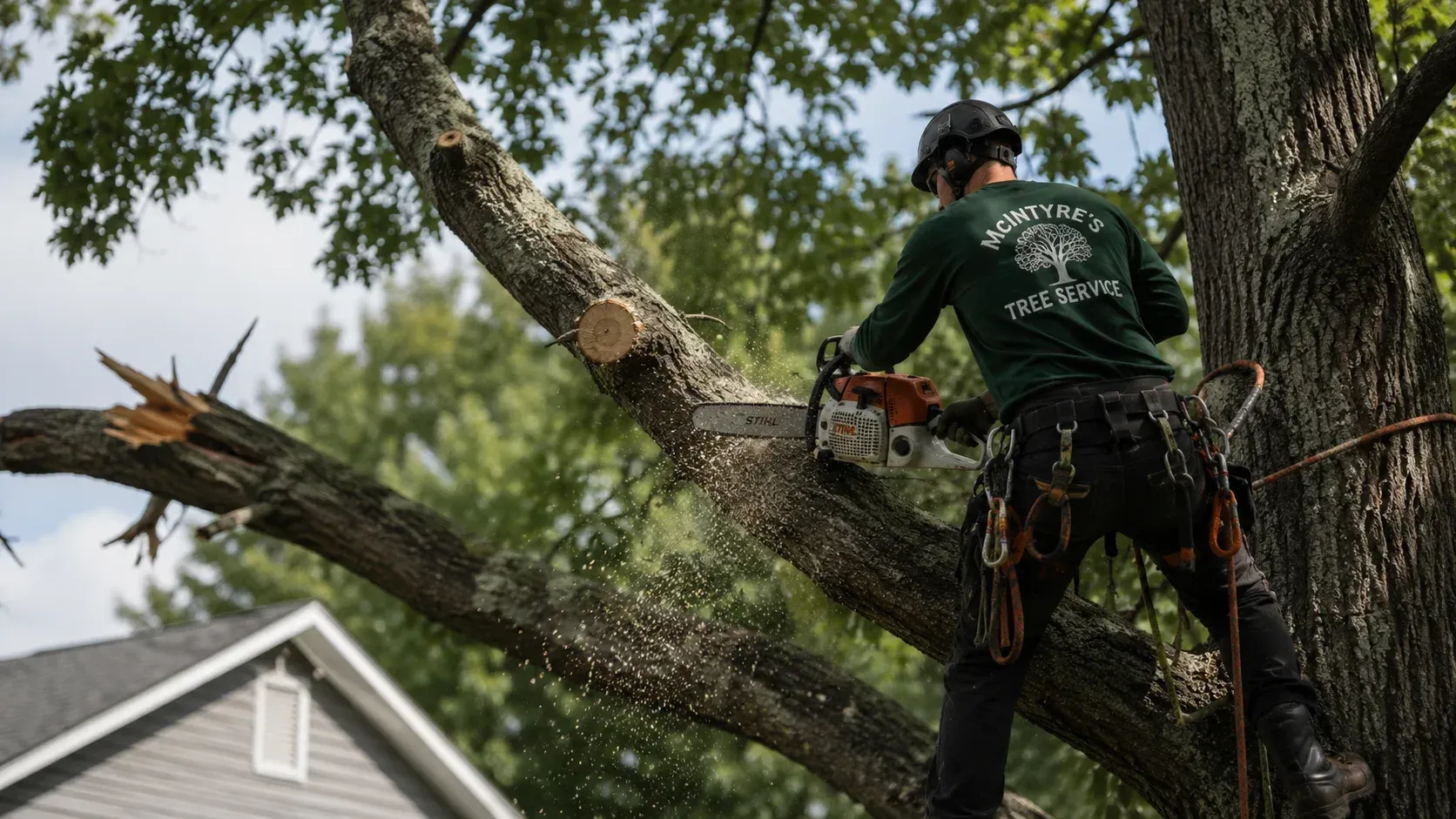
How Land Clearing Can Improve Drainage and Help Prevent Flooding

Table of Contents
- Introduction
- Why an Old Stump Can Get in the Way of Landscaping
- Stump Removal vs. Stump Grinding
- What Happens to the Yard After a Stump Is Ground
- Landscaping Projects That Become Easier After Stump Removal
- What Homeowners Should Consider Before Removing a Stump
- Why DIY Stump Removal Can Be More Difficult Than It Looks
- What to Do With the Area After Stump Grinding
- When Stump Removal Is Worth Doing Before Landscaping
- Conclusion
- Ready to Clear the Way for Your Landscaping Project?
- Frequently Asked Questions
Key Takeaways
- An old tree stump can interfere with planting, mowing, hardscaping, and the overall layout of a landscape.
- Stump grinding is often a practical way to remove the visible obstruction without excavating the entire root system.
- Grinding a stump does not mean every root underground has been removed.
- The remaining area may need additional soil, cleanup, leveling, or preparation before a new landscaping feature is installed.
- Stump removal is often easiest to plan before landscaping materials, plants, patios, walkways, or other improvements are installed.
- The right removal method depends on the stump's location, size, surrounding property, and what you intend to do with the area afterward.
Introduction
Removing an old tree stump before landscaping gives you a clearer, more usable area for planting, lawn work, walkways, garden beds, and other outdoor improvements. A stump that looks relatively harmless can become an obstacle once you start redesigning the yard.
A mower cannot pass cleanly over a protruding stump. A planting bed may have to be designed around it. A walkway or patio may need to shift to accommodate it. Even an unused stump can continue taking up valuable space in a yard that you want to use differently.
For homeowners in the Poconos, this is especially relevant when an older tree has already been removed but the remaining stump was left behind. Stump grinding can remove the portion of the stump that interferes with the surface of your yard and make the area easier to reclaim for a future landscaping project.
Why an Old Stump Can Get in the Way of Landscaping
A stump does more than take up space.
Its location can affect how you plan the rest of the property.
It limits where you can plant
A stump in the middle of a proposed flower bed or planting area can make it difficult to establish the layout you want.
You may be able to plant around a small stump, but that means allowing the remaining obstacle to dictate your landscaping design.
Removing it gives you greater flexibility.
It can interfere with lawn maintenance
Stumps can become obstacles for lawn equipment, particularly when they are close to the surface or hidden by grass and vegetation.
A mower may need to be maneuvered around the stump, and exposed portions can create an unnecessary hazard to equipment.
It can interfere with hardscaping
Planning a walkway, patio, retaining feature, fence, or other landscape improvement requires knowing where the usable space actually is.
A stump in the proposed footprint can force the design to change or require additional preparation before construction begins.
It can make an unfinished yard look unfinished
Even after a tree has been removed, the remaining stump can leave the area looking incomplete.
If your goal is to create a new lawn, planting bed, or other finished landscape, removing the visible obstruction is often an important part of preparing the space.
Stump Removal vs. Stump Grinding
These terms are often used interchangeably, but they do not necessarily mean the same thing.
Stump grinding uses specialized equipment to grind the remaining stump down below the surrounding surface. The resulting wood material can then be cleared from the area as needed.
Complete stump removal, by contrast, generally involves excavating the stump and a larger portion of the root system.
For many landscaping projects, grinding can be a practical option because the main above-ground obstruction is removed without requiring the entire root system to be excavated.
That distinction matters when planning what happens next.
If you want to plant directly in the same location, install a structure, or perform significant excavation, you may need to discuss the extent of removal required for the project rather than assuming grinding and complete root removal are identical.
What Happens to the Yard After a Stump Is Ground?
Stump grinding does not magically turn the area into a finished planting bed.
After the stump has been ground down, you may still have:
- Wood chips
- A depression where the stump previously stood
- Remaining larger roots
- Uneven soil
- An area that needs additional topsoil
- Soil that needs to settle before certain landscaping work begins
The exact follow-up work depends on your landscaping plans.
For a simple lawn restoration, the area may need to be cleared, filled, leveled, and prepared for grass.
For a planting bed, you may need to incorporate suitable soil and establish the desired grade before planting.
For a hardscape project, the requirements can be different again because the area may need more substantial excavation and preparation.
This is why it is useful to decide what you want to do with the space before the stump is removed.
Landscaping Projects That Become Easier After Stump Removal
Stump removal can make a number of common landscaping projects easier to plan.
New lawn areas
A stump in an open lawn creates a mowing obstacle and interrupts the finished appearance.
Grinding the stump and preparing the resulting area can make it easier to reclaim that section for grass.
Flower and planting beds
If you're redesigning an existing yard, removing a stump gives you more freedom to establish the shape and boundaries of a planting bed.
It also eliminates the need to permanently design around an unwanted obstruction.
Walkways
A walkway needs a clear, practical route.
A stump positioned along the planned path can force an unnecessary curve or require the walkway to be relocated.
Removing the obstacle beforehand gives the landscaping plan more flexibility.
Patios and outdoor living areas
A stump occupying part of a proposed patio or seating area should generally be addressed before the hardscape is installed.
Trying to build around an existing stump can compromise the layout and reduce usable space.
Garden expansion
If an unused section of the yard is being converted into a garden, old stumps can make preparation more difficult.
Removing them first allows you to establish the new layout without having to work around obstacles that no longer serve a purpose.
What Homeowners Should Consider Before Removing a Stump
Before scheduling stump grinding, think about what you want the area to become.
How close is the stump to structures?
Stumps near foundations, retaining walls, fences, driveways, utilities, or other structures may require additional care during removal.
What will occupy the area afterward?
The amount of preparation needed can depend heavily on the next use.
A lawn restoration is different from preparing a location for a patio or new structure.
Is the stump accessible?
Equipment needs room to reach the stump and operate safely.
A stump in a fenced-in backyard, narrow side yard, or difficult-to-access location may require a different approach than one in an open lawn.
Do you need the roots completely removed?
This is one of the most important questions to answer.
Grinding primarily addresses the stump itself. It does not mean every underground root has been excavated.
If your next project requires substantial excavation in the same location, explain that plan before the work begins so the appropriate removal method can be considered.
Why DIY Stump Removal Can Be More Difficult Than It Looks
A small stump might look like something you can simply dig out over a weekend.
Larger stumps can be a very different situation.
Tree roots can extend well beyond the visible stump, and removing a substantial root system manually can involve considerable digging and cutting. Using improvised methods or unsuitable equipment can also damage surrounding landscaping or create unnecessary safety risks.
There is another issue homeowners sometimes overlook: underground utilities.
Before digging deeply around a stump, the location of underground utility lines should be considered. A professional assessment can help determine how the stump can be approached safely.
Grinding also requires specialized equipment that most homeowners do not have.
For larger stumps, difficult access, or locations close to structures, professional stump grinding is generally a more practical option than attempting to excavate the stump yourself.
What to Do With the Area After Stump Grinding
Once the stump has been ground, don't rush directly into the final landscaping installation.
First, clear away excess wood material and assess the condition of the remaining area.
Then determine what preparation the next project requires.
For example:
For a lawn:
The area may need suitable soil, leveling, and grass establishment.
For a planting bed:
You may need to establish the desired bed shape, improve the soil where appropriate, and prepare the area for the selected plants.
For a walkway:
The finished grade and base preparation should be established according to the requirements of the walkway material.
For a patio or other hardscape:
More extensive excavation and base preparation may be necessary.
The important point is that stump grinding is preparation, not the entire landscaping project.
It removes an obstacle so the next stage can be completed more effectively.
When Stump Removal Is Worth Doing Before Landscaping
If you're already planning to redesign your yard, it usually makes sense to address unwanted stumps before installing the new landscape.
Removing the obstacle first can help you:
- Finalize the landscape layout
- Avoid designing around an unwanted stump
- Improve lawn-mowing access
- Create more usable planting space
- Prepare areas for walkways or hardscaping
- Avoid disturbing newly installed landscaping later
The timing matters too.
Installing a new patio, garden, or lawn and then deciding to remove a nearby stump afterward can mean disturbing work that was already completed.
Handling the stump during the property-preparation stage keeps the sequence more straightforward.
Conclusion
A tree may be gone, but its stump can continue affecting how you use the space.
If you're planning a new lawn, planting bed, walkway, patio, or another landscaping improvement, removing an unwanted stump first can give you more freedom to design the area properly. Stump grinding is often an efficient way to eliminate the visible obstruction, although the resulting area may still require additional soil preparation or cleanup depending on what you plan to build or plant there.
The best approach is to think beyond the stump itself. Decide what the area needs to become, then choose the removal and site-preparation approach that supports that goal.
Ready to Clear the Way for Your Landscaping Project?
An unwanted stump does not have to dictate the layout of your yard. If you're preparing an area for a new lawn, planting bed, walkway, or other landscaping project,
schedule stump grinding to discuss the stump's location and what you plan to do with the space afterward.
Frequently Asked Questions
Can I landscape immediately after stump grinding?
Not always. The area may contain wood chips, a depression, remaining roots, or uneven soil. The appropriate preparation depends on whether you're planting grass, creating a garden, or installing hardscaping.
Does stump grinding remove all of the tree's roots?
No. Stump grinding removes the main stump and grinds it below the surface, but it does not normally excavate the tree's entire root system.
Is stump grinding better than complete stump removal for landscaping?
It depends on the project. Grinding can be practical when you primarily need the surface obstruction removed, while some projects may require more extensive excavation.
Can a stump be ground if it is close to a house or fence?
Often, accessibility and surrounding structures need to be considered before the work begins. A professional can assess the location and determine an appropriate approach.
Should I remove stumps before installing new landscaping?
Usually, if the stump occupies an area that will be redesigned. Removing it during the preparation stage can prevent it from interfering with the layout or requiring newly installed landscaping to be disturbed later.
Related Posts